
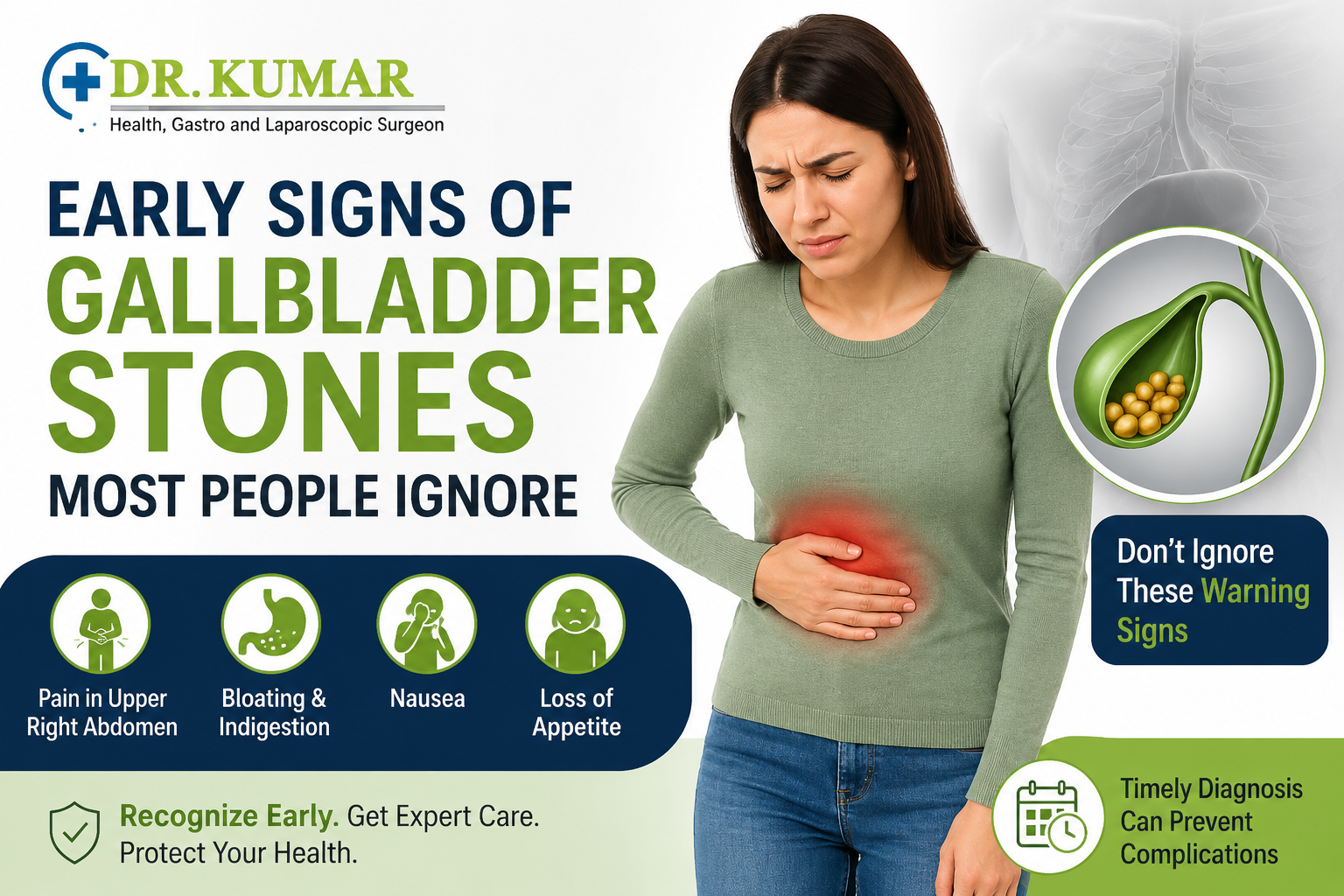
Most people assume that severe pain is the first sign of a health problem. When it comes to Gallbladder stones, that assumption often leads to delayed diagnosis and unnecessary suffering.
The reality is that gallstones usually begin with subtle symptoms that are easy to dismiss. A little bloating after meals, occasional discomfort on the right side of the abdomen, unexplained nausea, or indigestion may not seem alarming. Yet these seemingly minor issues can be early indicators of gallstones developing inside the gallbladder.
Many patients who eventually require treatment often say the same thing: “I wish I had paid attention sooner.”
Understanding these early warning signs can help you seek medical advice before complications arise. In this guide, Dr Kumar at Billroth Hospitals explains the symptoms, risk factors, treatment options, and when you should consult a gallbladder stone specialist.
What Are Gallbladder Stones?
The gallbladder is a small organ located beneath the liver. Its primary role is to store bile, a digestive fluid that helps break down fats.
When substances in bile become imbalanced, hardened deposits can form inside the gallbladder. These deposits are known as Gallbladder stones.
Gallstones can range from tiny grains to larger stones that occupy a significant portion of the gallbladder. Some individuals live with them for years without symptoms, while others experience sudden attacks that require immediate medical attention.
Why Are Gallstones Often Missed?
One of the biggest challenges with gallstones is that the symptoms often mimic common digestive issues.
People frequently attribute their discomfort to:
>> Gas
>> Acidity
>> Indigestion
>> Heavy meals
>> Stress-related digestive problems
As a result, the condition may remain undiagnosed until a severe pain episode occurs.
Understanding the early warning signs of gallstones in adults can help prevent this delay.
Early Signs of Gallbladder Stones Most People Ignore
1. Persistent Bloating After Meals
Feeling bloated occasionally is normal. However, frequent bloating after eating fatty or oily foods may indicate a gallbladder issue.
When gallstones interfere with the normal flow of bile, digestion becomes less efficient. This can lead to:
>> Abdominal fullness
>> Excess gas
>> A feeling of heaviness after meals
Many people treat these symptoms with over-the-counter remedies without realizing the actual cause.
2. Mild Pain in the Upper Right Abdomen
One of the earliest signs of gallstones is discomfort in the upper right side of the abdomen.
Initially, the pain may be:
>> Dull rather than sharp
>> Intermittent
>> Triggered by certain foods
Because it comes and goes, patients often ignore it. Over time, however, the pain can become more frequent and intense.
3. Nausea Without a Clear Cause
Repeated episodes of nausea, particularly after eating rich foods, should not be overlooked.
Gallstones can disrupt digestion, causing feelings of sickness even when there is no stomach infection or food poisoning involved.
If nausea becomes a recurring problem, it may be worth discussing it with a gallbladder stone specialist.
4. Frequent Indigestion
Many patients diagnosed with gallstones report months of unexplained indigestion beforehand.
Common complaints include:
>> Burning sensation
>> Burping
>> Acid reflux-like symptoms
>> Discomfort after meals
These signs often overlap with other digestive conditions, making proper evaluation important.
5. Shoulder or Back Pain
Gallbladder-related pain does not always stay in the abdomen.
Some individuals experience discomfort that radiates to:
>> The right shoulder
>> Upper back
>> Area between the shoulder blades
This referred pain can be confusing and is frequently mistaken for muscular strain.
6. Intolerance to Fatty Foods
If you suddenly find yourself avoiding fried or greasy foods because they consistently make you feel unwell, your gallbladder may be trying to tell you something.
People with gallstones often notice symptoms shortly after consuming:
>> Fried foods
>> Fast food
>> Cream-based dishes
>> High-fat meals
This pattern should not be ignored.
7. Unexplained Digestive Discomfort at Night
Many gallstone patients experience discomfort during the evening or late at night.
Pain may begin several hours after dinner and disrupt sleep. While occasional digestive upset can happen to anyone, recurring nighttime symptoms deserve medical evaluation.
Understanding the Causes and Symptoms of Gallbladder Stones
Knowing the causes and symptoms of gallbladder stones can help you identify your risk level.
Several factors contribute to gallstone formation:
Obesity
Excess body weight increases cholesterol levels in bile, making stone formation more likely.
Rapid Weight Loss
Ironically, losing weight too quickly can also trigger gallstones.
High-Fat Diets
Diets rich in unhealthy fats may increase the risk of gallstone development.
Diabetes
Individuals with diabetes often have a higher likelihood of developing gallstones.
Family History
Genetics can play a significant role in determining risk.
Age and Gender
Women and individuals over 40 are generally at greater risk.
What Happens If Gallstones Are Left Untreated?
Ignoring symptoms can lead to serious complications.
These include:
Gallbladder Inflammation
Known as cholecystitis, this condition can cause severe pain and fever.
Blocked Bile Ducts
Gallstones can obstruct bile flow, leading to jaundice and infection.
Pancreatitis
In some cases, gallstones may trigger inflammation of the pancreas, a potentially serious condition.
Emergency Hospitalization
What begins as mild discomfort can eventually require urgent surgical intervention.
This is why early diagnosis remains crucial.
How Are Gallstones Diagnosed?
A consultation with Dr Kumar at Billroth Hospitals typically involves:
>> Detailed symptom assessment
>> Physical examination
>> Ultrasound imaging
>> Blood investigations when necessary
Ultrasound is generally the most effective and commonly used method for detecting gallstones.
Prompt diagnosis allows treatment to be planned before complications occur.
Gallbladder Stone Symptoms and Treatment
When patients search for information about gallbladder stone symptoms and treatment, they often want to know whether surgery is always necessary.
The answer depends on several factors:
>> Severity of symptoms
>> Stone size
>> Number of stones
>> Presence of complications
Asymptomatic stones may simply be monitored.
However, symptomatic gallstones frequently require treatment to prevent recurring attacks and future complications.
Treatment Options for Gallbladder Stones
Laparoscopic Gallbladder Surgery
Laparoscopic surgery is currently one of the most widely performed treatments for gallstones.
Benefits include:
>> Small incisions
>> Reduced pain
>> Faster recovery
>> Shorter hospital stay
>> Minimal scarring
Dr Kumar at Billroth Hospitals performs advanced laparoscopic procedures designed to help patients return to normal activities quickly.
Robotic Gallbladder Surgery
Robotic surgery represents another advanced option for selected patients.
Advantages may include:
>> Enhanced surgical precision
>> Improved visualization
>> Greater dexterity during complex procedures
>> Reduced postoperative discomfort
>> Faster recovery in appropriate cases
As a surgeon with extensive expertise in minimally invasive procedures, Dr Kumar frequently evaluates whether a robotic approach is suitable based on the patient’s condition and overall health profile.
Open Gallbladder Surgery
Although less common today, open surgery may still be necessary in certain complex situations.
These may include:
>> Severe inflammation
>> Extensive scarring
>> Complicated gallbladder disease
>> Cases where minimally invasive approaches are not advisable
Dr Kumar carefully assesses each patient and recommends the safest and most effective surgical option.
What to Expect After Gallbladder Stone Removal Surgery
Modern gallbladder stone removal surgery is generally safe and highly effective.
Most patients experience:
>> Significant symptom relief
>> Improved digestion
>> Better quality of life
>> Reduced risk of future complications
Recovery time varies depending on the surgical approach used, but minimally invasive techniques typically allow patients to resume daily activities sooner.
When Should You See a Gallbladder Stone Specialist?
You should schedule an evaluation if you experience:
>> Recurrent abdominal pain
>> Bloating after meals
>> Persistent nausea
>> Fat intolerance
>> Pain radiating to the shoulder or back
>> Frequent indigestion
Early diagnosis often means simpler treatment and better outcomes.
Waiting until symptoms become severe can increase the risk of complications and emergency procedures.
Why Patients Trust Dr Kumar at Billroth Hospitals
When it comes to diagnosing and treating Gallbladder stones, experience matters.
Dr Kumar at Billroth Hospitals is recognized for his expertise in advanced minimally invasive surgery, including laparoscopic and robotic procedures. Patients benefit from personalized treatment plans, detailed evaluation, and access to modern surgical techniques designed to improve recovery and long-term outcomes.
Whether you are experiencing mild symptoms or have already been diagnosed with gallstones, seeking expert guidance early can make a significant difference.
Final Thoughts
Gallstones rarely appear overnight. In many cases, the body sends warning signals long before severe pain develops.
Persistent bloating, unexplained nausea, upper abdominal discomfort, and digestive issues are often dismissed as routine problems. However, these symptoms may be your body’s way of alerting you to an underlying gallbladder condition.
Recognizing the early warning signs of gallstones in adults and seeking timely medical evaluation can help prevent complications and ensure effective treatment.
If you have noticed recurring digestive symptoms or suspect you may have gallstones, consulting Dr Kumar at Billroth Hospitals can help you get the answers and care you need before a minor problem becomes a major one.
FAQs
What are the first signs of gallbladder stones?
Early signs often include bloating, nausea, indigestion, discomfort after fatty meals, and mild pain in the upper right abdomen.
Can gallstones go away without treatment?
Most gallstones do not disappear on their own. Symptomatic gallstones typically require medical evaluation and may need surgical treatment.
Is laparoscopic surgery better than open surgery for gallstones?
For many patients, laparoscopic surgery offers smaller incisions, less pain, and faster recovery. However, the best approach depends on individual circumstances.
Is robotic surgery available for gallbladder stone treatment?
Yes. Robotic surgery is an advanced minimally invasive option for selected patients and may provide enhanced precision and recovery benefits.
When should I consult a gallbladder stone specialist?
You should seek medical advice if you experience recurring abdominal pain, digestive discomfort, nausea, bloating, or symptoms that worsen after eating fatty foods.