
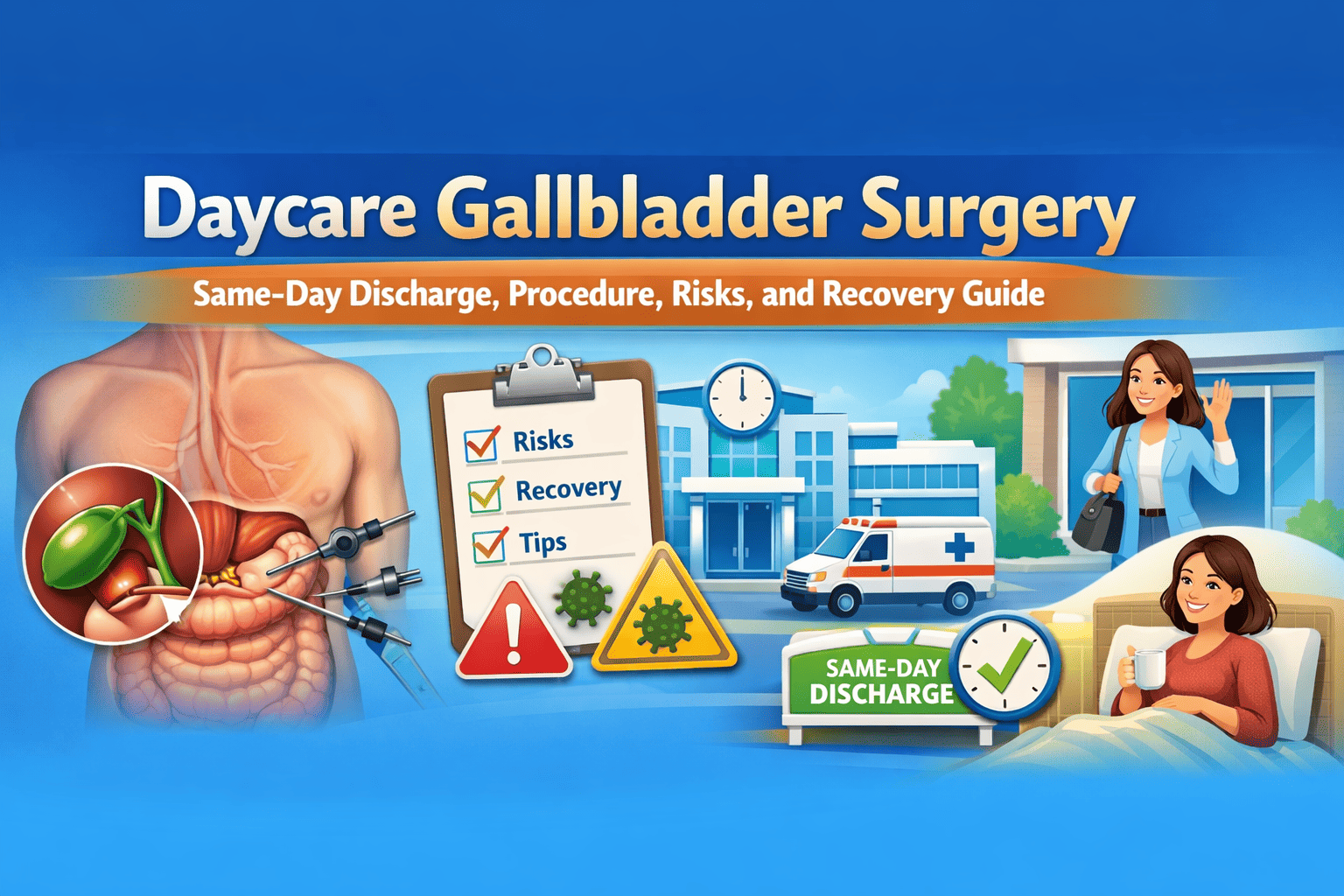
Dr Kumar Billroth Hospital
If you have been told that you need gallbladder surgery, your first concern is usually this:
Will I have to stay in the hospital for days?
The good news is that most patients today can go home the same day. With modern techniques and experienced hands, Daycare Gallbladder Surgery has become safe, precise, and patient-friendly.
At Dr Kumar Billroth Hospital, the focus is clear. Advanced laparoscopic and robotic approaches, faster recovery, less pain, and minimal hospital stay. This guide explains everything you need to know about Gallbladder Surgery, especially same-day discharge, procedure options, risks, and recovery.
Understanding Gallbladder Stones
Gallstones are hardened deposits that form inside the gallbladder. They may stay silent for years. But once they block the bile duct, symptoms appear suddenly:
>> Sharp pain in the right upper abdomen
>> Pain radiating to the back or shoulder
>> Nausea and vomiting
>> Fever in case of infection
If left untreated, stones can cause serious complications such as acute cholecystitis, pancreatitis, or bile duct obstruction. In such cases, timely gallbladder stone removal surgery becomes necessary.
Medication does not permanently remove stones in most cases. Surgery remains the definitive treatment.
What Is Daycare Gallbladder Surgery?
Daycare Gallbladder Surgery means you are admitted, operated on, and discharged within 24 hours, often the same evening.
It is possible because of:
>> Minimally invasive techniques
>> Advanced anesthesia protocols
>> Smaller incisions
>> Faster mobilization
Instead of staying in a hospital bed for days, patients walk out comfortably with proper guidance and follow-up support.
Types of Gallbladder Surgery
Modern Gallbladder Surgery can be performed in three ways:
1. Laparoscopic Surgery
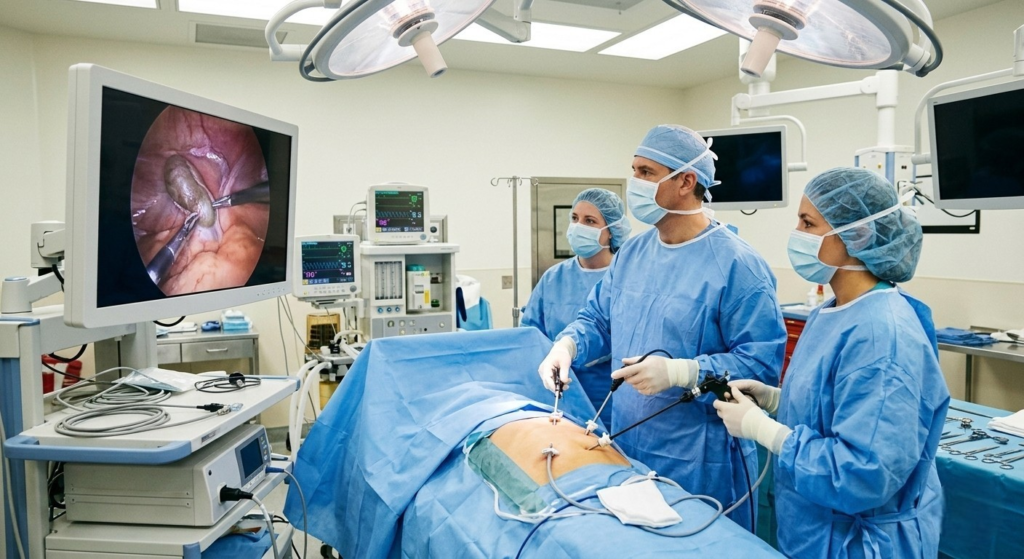
Also known as keyhole surgery, this technique uses small incisions and a camera to remove the gallbladder.
If you are researching about Laparoscopic Gallbladder Surgery, here is why it is preferred:
>> Minimal pain
>> Small scars
>> Faster recovery
>> Lower infection risk
>> Same-day discharge possible
This is currently the most common approach worldwide.
2. Robotic Surgery
Robotic gallbladder surgery is an advanced form of minimally invasive surgery. It allows:
>> Greater precision
>> Better visualization in complex cases
>> Enhanced control in obese patients or complicated anatomy
Robotic systems help surgeons operate with improved dexterity. For selected patients, robotic surgery offers excellent outcomes and quicker functional recovery.
Dr Kumar is primarily a laparoscopic and robotic surgeon, which means the emphasis is always on minimally invasive and precision-based surgery whenever suitable.
3. Open Surgery
Open surgery involves a larger incision in the abdomen. It is usually reserved for:
>> Severe infection
>> Complicated or ruptured gallbladder
>> Extensive scarring from previous surgeries
While safe, open surgery requires longer hospital stay and recovery time.
4. Single Incision Laparoscopic Surgery
This refined laparoscopic method removes the gallbladder through a single incision, usually at the navel.
It offers:
>> Improved cosmetic results
>> Minimal visible scarring
>> Reduced postoperative discomfort
It is suitable for selected patients and requires surgical expertise.
5. 3D Laparoscopic Surgery
3D laparoscopy enhances depth perception compared to traditional 2D systems. This provides better visualization of delicate bile ducts and surrounding structures.
It improves:
>> Surgical precision
>> Safety in complex cases
>> Overall accuracy
6. Endoscopic Retrograde Cholangiopancreatography (ERCP)
Not all stones remain inside the gallbladder. Sometimes stones pass into the common bile duct and cause obstruction, jaundice, or pancreatitis.
In such cases, Endoscopic Retrograde Cholangiopancreatography (ERCP) is performed.
ERCP is a specialized endoscopic procedure used to remove stones that have passed into the bile duct rather than removing the gallbladder itself. A flexible endoscope is passed through the mouth into the intestine. Instruments are then used to access the bile duct and extract the stone.
Important points about ERCP:
>> It does not remove the gallbladder
>> It is used specifically for bile duct stones
>> It may be performed before or after gallbladder surgery
>> It prevents serious complications such as cholangitis or pancreatitis
In many patients, ERCP is followed by laparoscopic or robotic gallbladder removal to prevent future stone formation.
For most routine gallstone cases, laparoscopic or robotic methods are preferred.
Who Needs Gallbladder Stone Removal Surgery?
You may require surgery if you have:
>> Recurrent pain attacks
>> Complicated gallstones
>> Gallbladder infection
>> Gallstones causing pancreatitis
>> Large or multiple stones
Choosing an experienced surgeon for gallbladder stones plays a critical role in ensuring safety and smooth recovery.
Step-by-Step: What Happens During Daycare Gallbladder Surgery?
Understanding the process reduces anxiety.
Before Surgery
>> Clinical evaluation
>> Blood tests
>> Ultrasound scan
>> Fitness assessment for anesthesia
>> Fasting for 6 to 8 hours
During Surgery
>> General anesthesia is given
>> 3 to 4 small incisions are made in laparoscopic surgery
>> A camera guides the surgeon
>> The gallbladder is carefully separated and removed
>> Incisions are closed with sutures or surgical glue
The procedure typically lasts 30 to 60 minutes.
After Surgery
>> You are monitored for a few hours
>> Once stable, you are encouraged to walk
>> Oral fluids are started
>> Discharge instructions are provided
Most patients go home the same day.
Why Patients Prefer Daycare Gallbladder Surgery
- Less hospital exposure
- Reduced medical costs
- Faster return to routine
- Psychological comfort of home recovery
- Lower risk of hospital-acquired infection
For working professionals and elderly patients, early discharge makes a significant difference.
Is Daycare Gallbladder Surgery Safe?
Yes, when performed by an experienced laparoscopic and robotic surgeon in a well-equipped hospital.
Safety depends on:
>> Proper patient selection
>> Pre-operative evaluation
>> Surgical expertise
>> Post-operative monitoring
Complications are uncommon but can include:
>> Bleeding
>> Infection
>> Bile leak
>> Injury to bile duct
>> Anesthesia-related reactions
These risks are rare in expert hands.
Recovery Timeline
First 24 Hours
>> Mild discomfort
>> Walking encouraged
>> Light food intake
2 to 5 Days
>> Gradual improvement
>> Resume light activities
>> Avoid heavy lifting
1 to 2 Weeks
>> Return to office work
>> Sutures removed if necessary
3 to 4 Weeks
>> Resume normal physical activity
Most patients feel significantly better within a week.
Diet After Gallbladder Surgery
The liver continues producing bile even after the gallbladder is removed.
Initial recommendations:
>> Small frequent meals
>> Low-fat diet for 1 to 2 weeks
>> Avoid deep-fried and oily foods temporarily
>> Stay hydrated
Gradually, most patients return to a normal diet without difficulty.
Who Is Eligible for Same-Day Discharge?
You are an ideal candidate if:
>> No major medical conditions
>> Uncomplicated gallstones
>> Stable vital signs post surgery
>> Adequate home support
Patients with severe infection or medical comorbidities may require short observation.
Why Choose Dr Kumar Billroth Hospital?
Choosing the right hospital is as important as choosing the procedure.
At Dr Kumar Billroth Hospital, the focus remains on:
>> Advanced laparoscopic techniques
>> Robotic precision surgery
>> Modern operation theatres
>> Dedicated anesthesia team
>> Clear communication
>> Patient-centered care
The hospital emphasizes minimally invasive methods first, followed by open surgery only when clinically necessary.
Experience matters in Gallbladder Surgery. A surgeon skilled in laparoscopic and robotic approaches ensures:
>> Reduced conversion to open surgery
>> Minimal complications
>> Faster discharge
>> Better cosmetic results
The Human Side of Surgery
Many patients walk into the clinic anxious. They imagine large incisions and long hospital stays. After undergoing Daycare Gallbladder Surgery, they are surprised by how smooth the experience feels.
They wake up, sip water, walk within hours, and return home the same evening. Within days, they resume normal life without recurring pain attacks.
That is the power of modern minimally invasive surgery.
When Should You Not Delay Surgery?
Seek urgent consultation if you experience:
>> Severe abdominal pain lasting more than 4 hours
>> Fever with chills
>> Persistent vomiting
>> Yellow discoloration of eyes
Delaying treatment can turn a simple laparoscopic procedure into a complicated emergency surgery.
Final Thoughts
Gallstones are common. Living with repeated pain attacks is not necessary. Modern Gallbladder Surgery techniques make treatment safe, quick, and effective.
Daycare Gallbladder Surgery offers:
>> Same-day discharge
>> Minimal scars
>> Faster recovery
>> Lower complication rates
>> Quick return to work
If you are looking for expert care, advanced laparoscopic expertise, and robotic precision under one roof, Dr Kumar Billroth Hospital provides a comprehensive and patient-focused approach.
A timely decision today can prevent emergency surgery tomorrow. If you have symptoms of gallstones, consult an experienced surgeon for gallbladder stones and explore minimally invasive options tailored to your condition.
Your comfort, safety, and recovery matter.
Frequently Asked Patient Concerns
Will I have pain after surgery?
Mild discomfort is expected but manageable with medication.
Can gallstones come back?
Once the gallbladder is removed, stones do not recur.
Is robotic surgery better than laparoscopic?
Both are excellent. Robotic surgery may offer advantages in complex or technically demanding cases.
When can I drive?
Usually within 5 to 7 days, depending on comfort level.
Can elderly patients undergo daycare surgery?
Yes, if medically fit.