

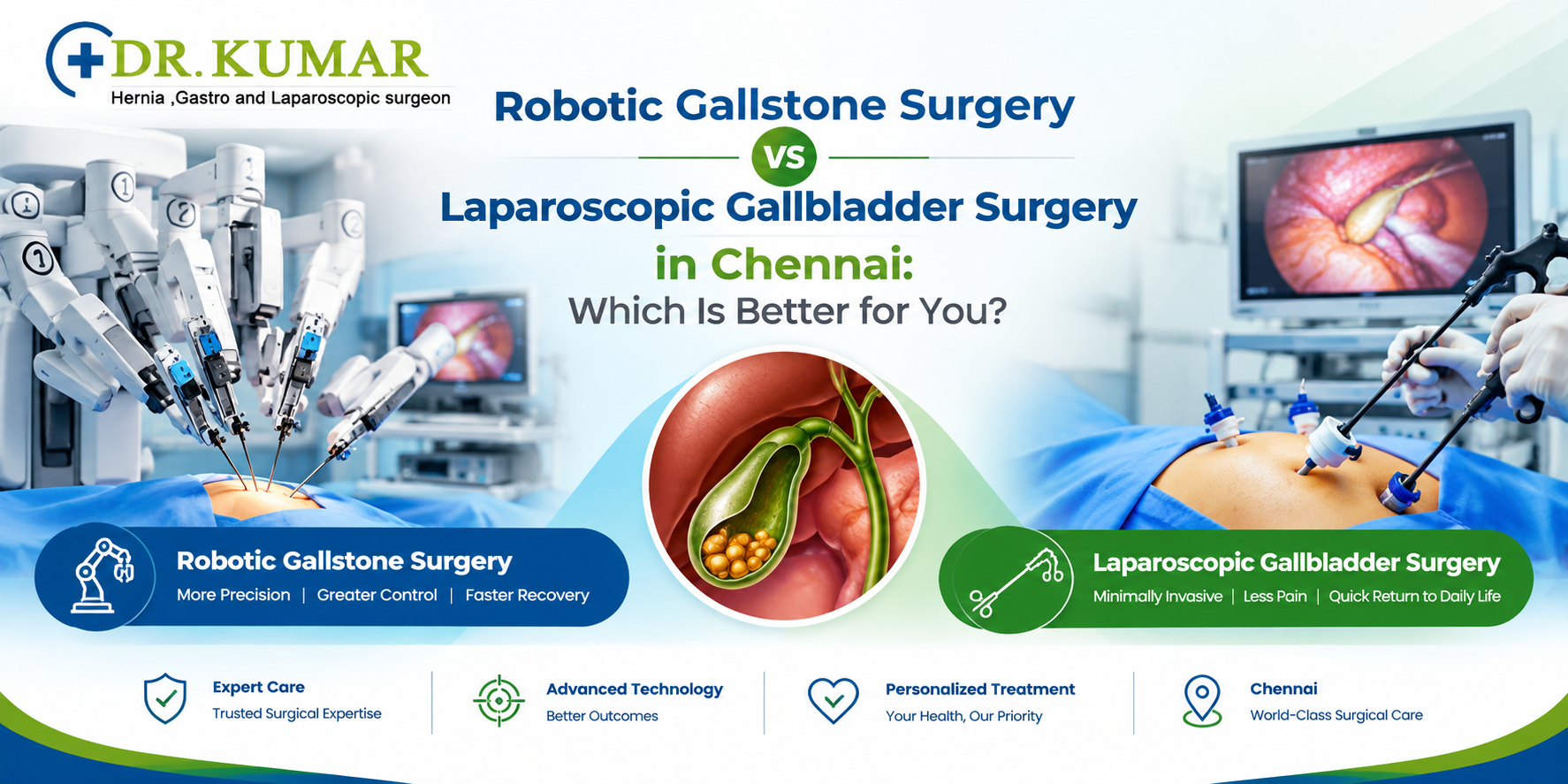
Gallbladder pain has an unpleasant habit of arriving when you least expect it. You might finish dinner, settle down for the evening, and suddenly feel a sharp pain beneath your right ribs. Sometimes it disappears within an hour. Other times, it becomes severe enough to make you seek emergency medical attention.
If an ultrasound confirms gallstones and your doctor recommends surgery, another question quickly follows: should you choose robotic surgery or conventional laparoscopic surgery?
Both are modern, minimally invasive procedures. Both can treat symptomatic gallstones effectively. However, their technologies, operating costs and suitability for individual patients are different.
For people considering robotic gallstone surgery in Chennai, understanding these differences is important before making a treatment decision.
At Dr Kumar at Billroth Hospitals, gallbladder treatment begins with a detailed assessment of symptoms, imaging results and medical history. With experience in advanced laparoscopic and robotic procedures, Dr Kumar helps patients understand which surgical approach is appropriate for their condition.
Why Do Gallstones Sometimes Require Surgery?
The gallbladder is a small organ beneath the liver that stores bile, a digestive fluid that helps break down fats.
Gallstones develop when substances within bile form hardened deposits. Some people live with gallstones for years without experiencing any symptoms. Others develop recurring abdominal pain, nausea or inflammation.
Common symptoms of gallbladder problems include:
- Pain in the upper-right or central abdomen, particularly after meals
- Pain that spreads towards the back or right shoulder
- Nausea and vomiting during painful episodes
- Repeated attacks that interfere with sleep or daily activities
- Fever or jaundice when complications develop
Not everyone with gallstones requires an operation. Stones discovered accidentally during an ultrasound may only need observation if they are not causing symptoms.
However, recurrent gallstone attacks, gallbladder inflammation and certain complications often make surgery the preferred treatment.
The standard operation is called a cholecystectomy. It removes the gallbladder along with the stones, rather than simply removing individual stones.
This is where the choice between laparoscopic and robotic surgery becomes relevant.
What Is Robotic Gallstone Surgery?
Robotic gallstone surgery, medically called robotic-assisted cholecystectomy, is a minimally invasive procedure in which a surgeon operates using a robotic surgical system.
Despite the name, the robot does not perform the surgery independently.
The surgeon remains in control throughout the operation, directing specialised instruments through small abdominal incisions.
The robotic system provides several technical features:
- Magnified, three-dimensional visualisation of the surgical area
- Wristed instruments capable of flexible movements
- Motion scaling and tremor filtration
- Precise control during delicate surgical steps
These capabilities can be helpful when operating in restricted spaces or dealing with challenging anatomy.
For selected patients with difficult gallbladder conditions, robotic gallbladder surgery may be considered after reviewing the anatomy, inflammation and previous surgical history.
However, the availability of advanced technology does not automatically mean robotic surgery is the better choice for every patient.
What Is Laparoscopic Gallbladder Surgery?
Laparoscopic gallbladder surgery is a well-established procedure used worldwide for gallbladder removal.
Instead of making one large abdominal incision, the surgeon inserts a camera and specialised instruments through several small openings.
The camera displays the surgical area on a monitor while the surgeon carefully separates and removes the gallbladder.
Laparoscopic cholecystectomy is generally the standard surgical approach for symptomatic gallstones because it has an established safety record and recovery advantages compared with conventional open surgery.
Its benefits for suitable patients include:
- Smaller incisions
- Less postoperative discomfort compared with open surgery
- Shorter hospitalisation
- Earlier mobilisation
- A relatively quick return to everyday activities
Laparoscopic surgery is also widely available and generally costs less than robotic-assisted surgery.
For many routine gallbladder conditions, conventional laparoscopy remains a highly effective treatment option.
Robotic vs Laparoscopic Gallbladder Surgery: Key Differences
Understanding the practical differences can make your consultation more productive.
| Comparison | Robotic Gallbladder Surgery | Laparoscopic Gallbladder Surgery |
| Surgical approach | Robot-assisted keyhole surgery | Conventional keyhole surgery |
| Camera view | Magnified 3D visualisation | Usually 2D high-definition visualisation |
| Instrument movement | Wristed instruments with articulated movements | Conventional laparoscopic instruments |
| Incisions | Small abdominal incisions | Small abdominal incisions |
| Anaesthesia | General anaesthesia | General anaesthesia |
| Recovery | Usually relatively quick | Usually relatively quick |
| Hospital stay | Often same-day or overnight for uncomplicated cases | Often same-day or overnight for uncomplicated cases |
| Cost | Generally higher | Generally more affordable |
| Clinical suitability | Selected patients based on surgical assessment | Standard option for many routine cases |
The most important difference is not simply the surgical equipment. It is how appropriately that equipment is used for the patient’s condition.
Which Surgery Is Safer for Gallbladder Stone Removal?
Safety should come before every other consideration.
Both robotic and laparoscopic cholecystectomy are established surgical techniques, but neither eliminates the possibility of complications.
Potential risks include bleeding, infection, bile leakage, injury to the bile ducts and complications related to anaesthesia.
A major concern during gallbladder surgery is recognising the bile duct anatomy correctly before dividing any structures.
Surgeons use established safety techniques, including obtaining the critical view of safety, to reduce the risk of injury.
Robotic systems offer technical advantages in visualisation and instrument movement. However, published research has produced mixed findings about whether robotic surgery improves overall patient outcomes.
Some large observational studies have reported higher bile duct injury rates with robotic procedures, while other analyses adjusting for disease severity and surgeon-related factors have reported more favourable robotic outcomes in selected groups.
Therefore, robotic surgery should not be presented as universally safer than laparoscopy.
The safest surgical decision depends on the surgeon’s experience, the patient’s anatomy, the severity of the disease and the ability to respond appropriately if difficulties arise.
An experienced gallbladder doctor specialist should explain these factors before recommending either technique.
When Might Robotic Gallbladder Surgery Be Considered?
Although conventional laparoscopic surgery works well for many patients, robotic assistance may be useful in selected situations.
Difficult Gallbladder Anatomy
Some patients have anatomical variations that require careful identification of structures around the gallbladder.
Robotic instruments and three-dimensional imaging may assist the surgeon during detailed dissection.
Previous Abdominal Surgery
Earlier operations can sometimes cause internal adhesions, making subsequent procedures more challenging.
Depending on their location and severity, robotic assistance may be considered. However, previous surgery alone does not make robotic treatment necessary.
Complicated Gallbladder Conditions
Recurrent inflammation, scarring or difficult tissue planes can make gallbladder removal more demanding.
In these circumstances, the surgeon must decide which approach provides the best opportunity for safe treatment.
Robotic surgery may be appropriate in selected cases, although severe inflammation can also require alternative surgical strategies.
Patients Requiring Individualised Surgical Planning
Obesity, diabetes, previous complications and other medical conditions may influence the treatment plan.
These factors require a complete assessment rather than an automatic preference for robotic surgery.
For patients with straightforward symptomatic gallstones, standard laparoscopic surgery may offer comparable clinical outcomes without the additional cost.
Recovery After Robotic and Laparoscopic Gallbladder Surgery
For most patients, recovery is nearly as important as the operation itself.
A working professional may worry about taking leave. A parent may be concerned about household responsibilities. Someone travelling regularly across Chennai may want to know when driving and commuting will become comfortable again.
Fortunately, both minimally invasive approaches generally allow relatively early mobilisation.
First 24 Hours
Patients are usually encouraged to begin gentle movement once they have recovered sufficiently from anaesthesia.
Some patients can return home on the day of surgery, while others require overnight observation.
First Week
Mild abdominal discomfort, bloating, fatigue or shoulder-tip pain may occur following keyhole surgery.
Many patients gradually resume light household activities or desk-based work within several days to a week, depending on their recovery.
Following Weeks
Heavy lifting, strenuous exercise and physically demanding work may require a longer recovery period.
The surgeon will advise when to resume these activities based on healing and the actual procedure.
There is currently no reliable basis for promising that robotic surgery always produces less pain or a faster recovery than conventional laparoscopy.
The more meaningful goal is a safe operation followed by a well-managed recovery.
Robotic Gallstone Surgery Cost vs Laparoscopic Surgery Cost in Chennai
Cost is a reasonable concern when selecting a surgical procedure.
Generally, robotic gallbladder surgery costs more because it requires specialised equipment, robotic instruments and additional operating resources.
Laparoscopic surgery typically has lower equipment-related costs and is widely performed.
However, the final hospital bill can depend on several factors:
- Complexity of the gallbladder condition
- Surgical technique selected
- Anaesthesia and operating theatre charges
- Preoperative investigations
- Room category and hospital stay
- Additional treatment for complications, if required
- Insurance coverage and cashless eligibility
Patients should request a written estimate before proceeding with planned surgery.
Rather than choosing robotic surgery simply because it appears more advanced, discuss whether its technical features offer a meaningful benefit in your particular case.
How Do You Choose the Best Gallbladder Surgeon in Chennai?
Choosing an experienced surgeon is often more important than choosing the newest surgical technology.
If you are searching for the best gallbladder surgeon in Chennai, start by assessing practical factors that influence surgical care.
Ask whether the surgeon regularly performs laparoscopic gallbladder operations and has experience managing inflamed or complicated gallbladders.
You should also understand how the surgeon handles unexpected findings during surgery.
A good consultation should answer questions such as:
- Why is gallbladder removal recommended in my case?
- Is conventional laparoscopy suitable for my condition?
- Would robotic assistance offer any specific advantage?
- What are my individual surgical risks?
- How long might I need to stay in hospital?
- What would happen if the operation becomes more complicated?
Patients searching for the best hospital for gallbladder stone surgery in Chennai should also consider the hospital’s anaesthesia services, surgical infrastructure, emergency support and postoperative care.
A hospital and surgeon that can explain both the benefits and limitations of available treatments can help patients make better-informed decisions.
Why Consult Dr Kumar at Billroth Hospitals for Gallbladder Surgery?
Gallbladder surgery may be routine for an experienced surgical team, but it is rarely routine for the person undergoing it.
Patients naturally want reassurance about pain, complications, recovery and whether the recommended treatment is necessary.
Dr Kumar at Billroth Hospitals, Chennai, brings more than 29 years of surgical experience, with over 5,000 gallbladder surgeries and more than 20,000 laparoscopic procedures reported in his professional profile.
His experience includes routine and complex gallbladder conditions, advanced laparoscopic surgery and robotic-assisted surgical techniques.
The treatment approach focuses on:
Accurate diagnosis: Understanding the symptoms, ultrasound findings and relevant investigations before recommending an operation.
Appropriate surgical selection: Considering laparoscopic or robotic treatment according to the patient’s condition rather than choosing technology alone.
Experience with difficult cases: Evaluating inflammation, adhesions and complex gallbladder conditions that may require additional surgical planning.
Patient-focused guidance: Explaining the operation, expected recovery, possible complications and postoperative instructions.
For patients considering robotic gallbladder surgery, a consultation provides an opportunity to determine whether robotic assistance is appropriate or conventional laparoscopy would be sufficient.
So, Which Is Better: Robotic or Laparoscopic Gallbladder Surgery?
There is no single answer that applies to everyone.
For many patients with uncomplicated symptomatic gallstones, laparoscopic cholecystectomy remains the standard, effective and generally more affordable option.
Robotic-assisted surgery offers sophisticated visualisation and instrument control that may be valuable in selected operations. However, it does not guarantee fewer complications or better recovery.
The right choice depends on the condition of your gallbladder, your medical history, the surgeon’s expertise and a careful discussion of the potential benefits and risks.
More importantly, patients should not delay medical evaluation while comparing technologies.
Severe or persistent abdominal pain, especially with fever, repeated vomiting or jaundice, requires urgent medical attention.
Book a Gallbladder Surgery Consultation with Dr Kumar in Chennai
If recurring gallbladder pain is affecting your meals, sleep or daily routine, it may be time to obtain a specialist opinion.
At Dr Kumar at Billroth Hospitals, patients can discuss their ultrasound findings, understand the available surgical options and receive recommendations based on their individual condition.
Whether you are considering conventional laparoscopic treatment or exploring robotic gallstone surgery, the priority is selecting an appropriate procedure with a clear understanding of what to expect.
Book your consultation with Dr Kumar at Billroth Hospitals, Chennai, and take the next step towards informed gallbladder treatment.
Frequently Asked Questions
1. Is robotic gallstone surgery better than laparoscopic gallbladder surgery?
Not necessarily. Both procedures remove the gallbladder through small incisions. Robotic surgery provides enhanced visualisation and flexible instruments, while laparoscopy remains the standard treatment for many routine cases. There is no consistent evidence that robotic surgery is better for every patient. The appropriate approach depends on the gallbladder condition and surgical assessment.
2. Is robotic gallbladder surgery more expensive in Chennai?
Robotic gallbladder surgery is generally more expensive because of specialised equipment and operating costs. The total expense varies according to hospital charges, the complexity of the procedure, insurance coverage and postoperative requirements. Patients should obtain an individual cost estimate before surgery.
3. How long does it take to recover from robotic gallstone surgery?
Many patients resume light activities within several days to a week after uncomplicated minimally invasive gallbladder surgery. Full recovery and return to strenuous work may take longer. Robotic surgery does not guarantee a faster recovery than laparoscopy, and postoperative instructions should be followed carefully.
4. Can gallstones be removed without removing the gallbladder?
For most patients requiring surgery for symptomatic gallstones, the usual treatment is removal of the gallbladder itself. Simply removing stones from the gallbladder can leave a risk of recurrence. Stones in the common bile duct may sometimes be removed through a separate endoscopic procedure called ERCP. Treatment depends on where the stones are located and the patient’s condition.
5. How can I consult a gallbladder doctor specialist in Chennai?
You can arrange an appointment with Dr Kumar at Billroth Hospitals, Chennai, for assessment of gallstones, recurrent abdominal pain or gallbladder inflammation. Bring your ultrasound reports, previous medical records and medication details. Dr Kumar can evaluate whether surgery is required and discuss laparoscopic or robotic treatment options suited to your condition.