

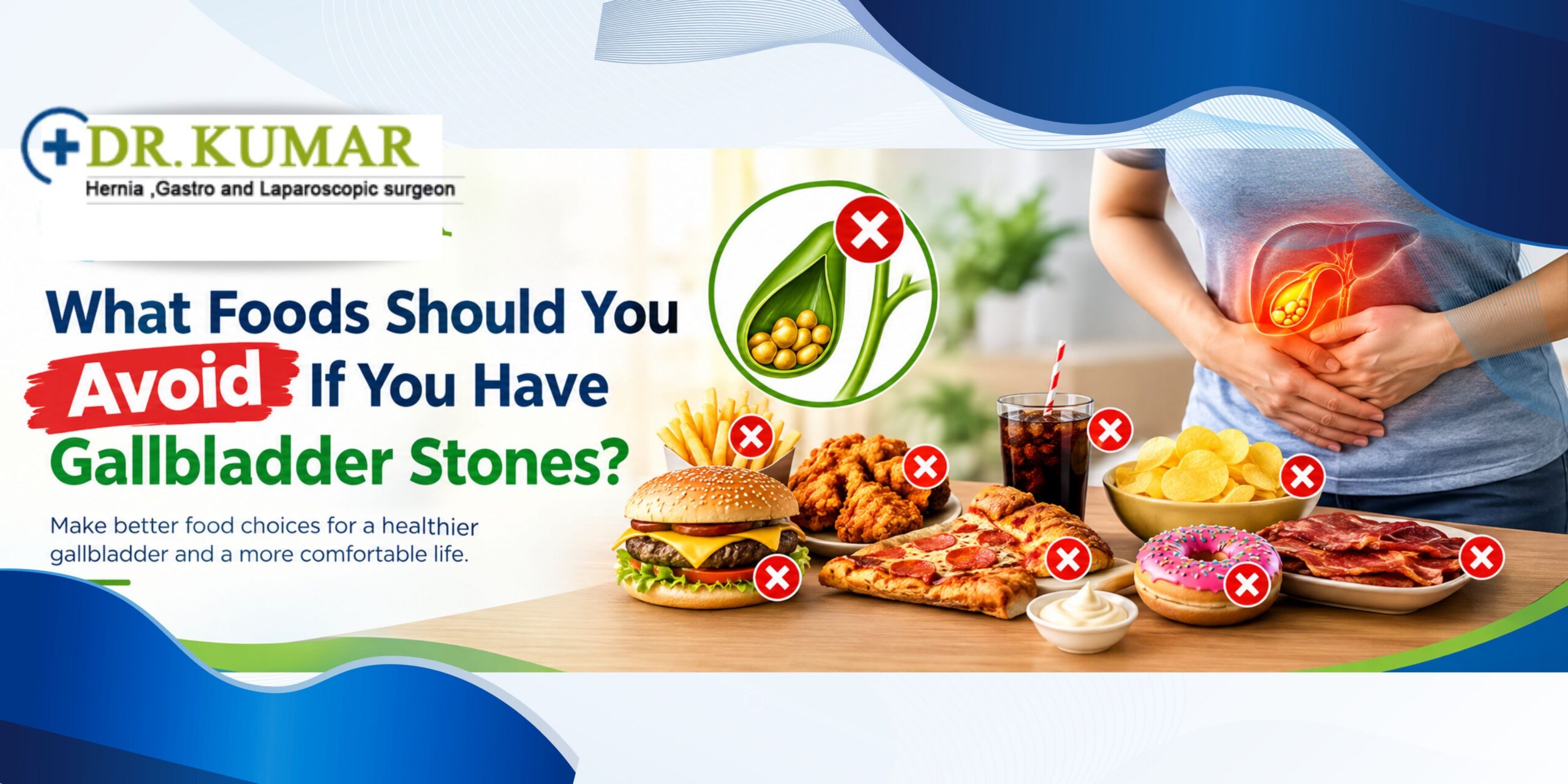
A plate of hot puris, butter chicken or biryani may look tempting, but for someone with gallbladder stones, a rich meal can sometimes end with severe pain, nausea or bloating.
Gallstones do not affect everyone in the same way. Some people can eat a particular food without any problem, while another person may experience intense discomfort after a similar meal. This is why understanding the foods to avoid with gallstones is less about following an extreme diet and more about recognising what places extra pressure on your gallbladder.
DrKumar gallbladder surgeon in Chennai regularly sees patients who have been avoiding entire food groups because of fear. Others continue eating trigger foods and repeatedly depend on painkillers. Neither approach addresses the condition properly.
A thoughtful diet for gallbladder stones may help reduce symptoms while you wait for medical treatment. However, diet cannot remove existing gallstones or guarantee that another painful attack will not occur.
Why Can Certain Foods Trigger Gallbladder Pain?
The gallbladder is a small organ located below the liver. It stores bile, a digestive fluid that helps the body break down fat.
When you eat a meal containing fat, the gallbladder contracts and releases bile into the small intestine. If gallstones block the outlet of the gallbladder or move into a bile duct, this contraction may cause sudden pain.
The pain is often felt in the upper right side or upper middle part of the abdomen. It may spread towards the back or right shoulder. Some patients also experience nausea, vomiting, sweating or heaviness after meals.
Fatty foods do not create immediate pain in every patient, but they are commonly reported among the foods that trigger gallbladder pain. Dietary fat stimulates gallbladder contraction, although individual tolerance varies.
1. Deep-Fried Foods
Deep-fried dishes are among the first foods worth reducing if you have symptomatic gallstones.
Common Indian examples include:
- Samosas
- Kachoris
- Pakoras and bajjis
- Pooris
- Bhature
- French fries
- Fried chicken
- Fried fish
- Vadas
- Chips and namkeen
These foods can contain large amounts of oil, particularly when prepared in restaurants or roadside stalls. Reused cooking oil may also make the food heavier and harder to tolerate.
You do not necessarily need to give up every favourite snack forever. Until your condition has been medically assessed, however, replacing deep-fried foods with steamed, grilled, baked or lightly sautéed options may reduce digestive discomfort.
For example, choose idli instead of vada, phulka instead of puri, or grilled fish instead of fried fish.
2. Rich Gravies and High-Fat Curries
Many Indian curries contain hidden sources of fat. Cream, butter, ghee, coconut cream, cashew paste and large quantities of oil can turn an ordinary dish into a trigger meal.
Foods that may cause symptoms include:
- Butter chicken
- Malai kofta
- Shahi paneer
- Korma
- Creamy restaurant gravies
- Mutton curries with visible fat
- Coconut-rich curries
- Dal prepared with heavy ghee tadka
Portion size matters too. You may tolerate a small portion but experience pain after a heavy restaurant meal with curry, rice, naan and dessert.
A more gallbladder-friendly diet can still include flavour. Use tomato, onion, ginger, garlic, herbs and spices while reducing excess oil, butter and cream.
3. Fatty and Processed Meat
Meat itself is not automatically unsuitable for people with gallstones. The cut, cooking method and portion size make a difference.
Try to limit:
- Mutton with visible fat
- Fatty cuts of red meat
- Sausages
- Salami
- Bacon
- Processed kebabs
- Organ meats cooked in excess oil
- Chicken with skin
Choose lean chicken, fish or trimmed meat cooked with less oil. Grilling, baking, steaming or pressure cooking may be better tolerated than frying.
Vegetarian protein options such as dal, beans, chickpeas, tofu and lightly cooked paneer can also be included according to individual tolerance.
4. Full-Fat Dairy Products
Full-fat dairy can contribute a substantial amount of fat to a single meal.
Possible trigger foods include:
- Full-cream milk
- Cream
- Butter
- Large quantities of ghee
- Full-fat cheese
- Ice cream
- Cream-based sweets
- Rich paneer dishes
You may not need to eliminate dairy completely. Low-fat curd, toned milk and modest portions of paneer may be easier to tolerate.
Pay attention to your own symptoms. If even a small dairy portion repeatedly causes discomfort, discuss it with DrKumar or a qualified dietitian rather than removing several nutritious foods without guidance.
5. Bakery Foods and Packaged Snacks
Biscuits, cakes and bakery products may not look oily, but they can contain butter, margarine, shortening or other added fats.
Common examples include:
- Cream biscuits
- Pastries
- Puffs
- Doughnuts
- Cakes
- Cookies
- Packaged chips
- Instant noodles
- Frozen snacks
- Fast-food burgers and pizzas
These products can also be high in refined carbohydrates, salt and calories.
For everyday snacks, consider fruit, roasted chana, makhana prepared with minimal oil, vegetable sandwiches without heavy spreads or a small bowl of poha.
6. Heavy Desserts and Indian Sweets
Indian sweets are often prepared with ghee, full-fat milk, cream, sugar and nuts. A small serving may not affect every patient, but a large portion after a rich meal can become difficult to digest.
Limit items such as:
- Gulab jamun
- Jalebi
- Rabri
- Halwa prepared with excess ghee
- Laddus
- Mysore pak
- Milk-based sweets
- Ice cream
- Creamy puddings
Dessert does not have to disappear completely. Fruit, a small serving of low-fat curd or a lighter homemade sweet may be a better choice.
7. Large and Irregular Meals
Gallstone symptoms are not always caused by one ingredient. Sometimes the problem is the size of the meal.
Skipping breakfast, eating very little during the day and then having a heavy dinner may provoke discomfort. Large meals require more digestive work and may stimulate a stronger gallbladder contraction.
Try eating smaller, balanced portions at regular times.
A simple Indian meal might include:
- Two phulkas without excess oil
- One bowl of dal
- A lightly cooked vegetable
- Salad
- Low-fat curd, if tolerated
Avoid lying down immediately after eating. Give your body time to digest the meal.
Do You Need a Completely Fat-Free Diet?
No. A completely fat-free or extremely low-fat diet is not suitable for everyone.
The body needs some dietary fat for energy, cell function and the absorption of certain vitamins. Very restrictive diets can cause nutritional problems and may lead to rapid weight loss.
Rapid weight loss and very low-calorie diets can increase the risk of gallstone formation. A balanced eating pattern with moderate portions of healthier fats is usually more appropriate than removing all fat.
Small amounts of nuts, seeds or vegetable oils may be included if they do not trigger symptoms. Personal tolerance should guide your choices.
What Can You Eat with Gallstones?
A practical gallbladder-friendly diet may include:
- Steamed idli
- Poha with limited oil
- Upma with vegetables
- Oats
- Brown rice or regular rice in moderate portions
- Phulka or chapati without excess ghee
- Dal and legumes
- Fresh vegetables
- Whole fruits
- Low-fat curd
- Lean chicken or fish
- Roasted or steamed snacks
- Adequate water
Choose whole grains, fibre-rich foods, vegetables and fruits while limiting refined carbohydrates, unhealthy fats and highly processed food. NIDDK recommends foods rich in fibre and healthy fats while reducing unhealthy fats and refined carbohydrates as part of a healthy eating pattern related to gallstone prevention.
Keep a simple food diary. Write down what you ate, how much you ate and whether pain, bloating or nausea followed. This can help identify personal triggers.
Can Diet Dissolve Gallstones?
Diet can help manage symptoms, but it does not usually dissolve gallstones that have already formed.
Avoid claims that lemon juice, olive oil mixtures, herbal powders or so-called gallbladder cleanses can flush out stones. There is no reliable evidence that these cleanses remove gallstones, and some ingredients may cause diarrhoea, vomiting or abdominal discomfort.
If you have repeated attacks, fever, jaundice or inflammation, continuing to rely only on diet may delay necessary treatment.
People with symptomatic gallstones are commonly advised to discuss gallbladder removal because painful attacks may recur.
When Should You Consult DrKumar?
Consult DrKumar gallbladder specialist if you have:
- Repeated upper-right abdominal pain
- Pain after fatty meals
- Vomiting or persistent nausea
- Fever with abdominal pain
- Yellowing of the eyes or skin
- Dark urine
- Pale stools
- Pain spreading to the back or shoulder
- A diagnosed gallstone with recurring symptoms
Severe pain, fever, jaundice or persistent vomiting can indicate inflammation or blockage and should not be ignored.
DrKumar evaluates symptoms, ultrasound findings, blood tests and the condition of the gallbladder before recommending treatment.
Surgical Options for Symptomatic Gallstones
When gallstones repeatedly cause pain or complications, gallbladder removal may be advised. The operation is called cholecystectomy.
DrKumar discusses three surgical approaches:
1. Laparoscopic Gallbladder Surgery
Laparoscopic surgery uses small incisions, a camera and specialised instruments. It is the most commonly performed approach and often allows a shorter hospital stay and faster recovery than open surgery.
As a laparoscopic surgeon, DrKumar gives strong consideration to this minimally invasive option when it is safe and suitable.
2. Robotic Gallbladder Surgery
Robotic surgery is another minimally invasive method. DrKumar robotic surgeon controls the instruments throughout the operation using a surgical console.
The robotic system assists with visualisation and precise movement. It does not operate independently. DrKumar may recommend this approach for selected patients based on clinical requirements.
3. Open Gallbladder Surgery
Open surgery requires a larger incision. It may be necessary in selected cases involving severe inflammation, dense scar tissue, unusual anatomy or other safety concerns.
DrKumar places greater emphasis on laparoscopic and robotic procedures while keeping open surgery available when it is the safer option.
Take Control Before Another Painful Attack
Learning the foods to avoid with gallstones can help you reduce symptom triggers, but it should not become a substitute for medical care.
Eat smaller portions, reduce deep-fried and high-fat foods, avoid crash diets and note which meals cause discomfort. Most importantly, seek proper evaluation if the pain keeps returning.
DrKumar at Billroth Hospitals provides personalised assessment and laparoscopic, robotic and open gallbladder surgery options in Chennai.
Consult DrKumar gallbladder surgeon to understand whether dietary changes are enough for the moment or whether definitive treatment should be considered.
Medical note: This article provides general information and does not replace a medical consultation. Individual dietary advice may differ based on diabetes, liver disease, pregnancy and other health conditions.
Frequently Asked Questions
1. Are eggs safe for people with gallstones?
Egg tolerance varies. Some people can eat boiled eggs without discomfort, while others find that the yolk triggers symptoms. Start with a small portion and observe your response.
2. Can I eat rice if I have gallbladder stones?
Yes, rice can usually be included in moderate portions. Avoid combining it with very oily curries, fried side dishes or large quantities of ghee.
3. Is curd good for gallstones?
Low-fat curd is often well tolerated and can be part of a balanced diet. Full-fat curd or large portions may cause discomfort in some patients.
4. Can drinking more water dissolve gallstones?
Water supports general health and hydration, but it cannot dissolve established gallstones. Symptomatic stones require medical assessment.
5. When is surgery required for gallstones?
Surgery may be recommended when gallstones cause repeated pain, inflammation, jaundice, pancreatitis or bile duct blockage. DrKumar assesses each patient before advising laparoscopic, robotic or open surgery.