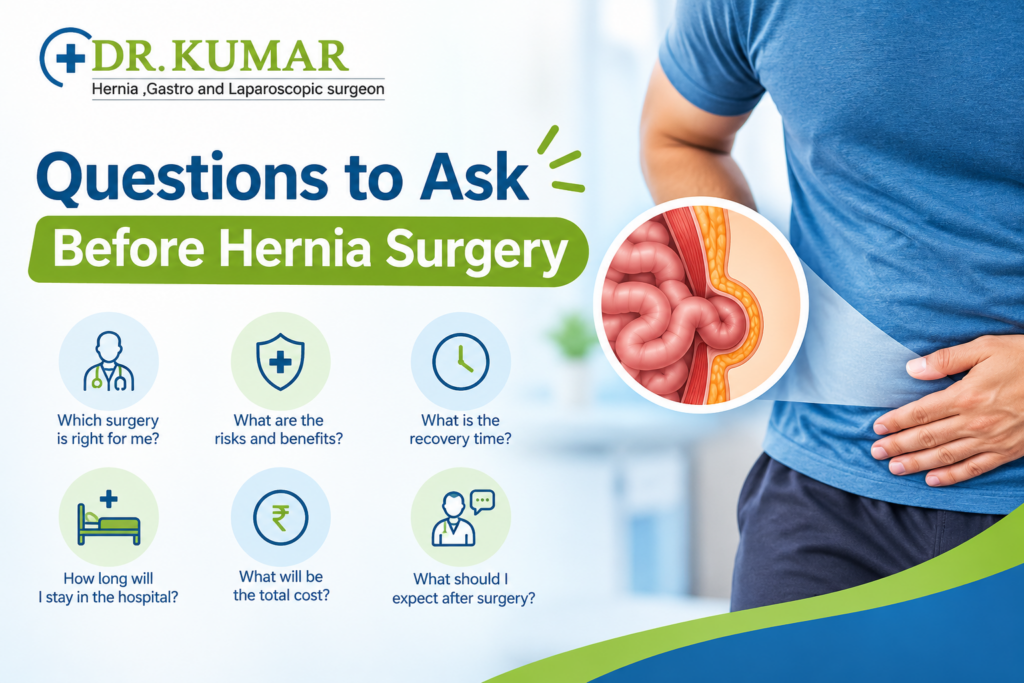

Is a 2.5 cm Hernia Big? Size, Symptoms, and When to See a Hernia Specialist

A hernia diagnosis can make anyone anxious, especially when the scan report mentions a measurement like 2.5 cm. Many patients immediately start searching online for answers. Is this small? Is it dangerous? Does it need surgery? Can it be managed with medicines? These are natural questions, and the honest answer is that hernia size matters, but it is not the only thing that decides treatment.

A 2.5 cm hernia is usually considered a medium-sized hernia. It is not tiny, but it is also not among the very large hernias that may need complex abdominal wall reconstruction. Still, the size alone should not make you relaxed or frightened. What matters more is the location of the hernia, the symptoms, whether the swelling is increasing, and whether there are any signs that the intestine or fat is getting trapped.

At Dr Kumar at Billroth Hospitals, patients are assessed with a careful clinical examination, scan findings, symptom history, lifestyle needs, and surgical fitness. DrKumar hernia surgeon gives special focus to minimally invasive treatment options, especially laparoscopic and robotic hernia surgery, while open repair is considered when it is the safer or more suitable option.

If you are trying to understand is 2.5 cm hernia big, this guide will help you make sense of the size, symptoms, risks, and when to meet a hernia specialist in Chennai.

What Does a 2.5 cm Hernia Mean?

A hernia happens when tissue, fat, or part of an organ pushes through a weak area in the muscle wall. In most abdominal wall hernias, the measurement mentioned in the report refers to the size of the defect or opening in the muscle wall.

A 2.5 cm opening means there is a gap large enough for tissue to bulge through. For some patients, this may appear as a visible swelling that increases while coughing, lifting, standing for long hours, or straining during bowel movements. For others, it may be noticed only during an ultrasound or scan.

A medium sized hernia like this often deserves proper evaluation because hernias do not usually heal by themselves. They may remain stable for some time, but they can also increase in size. Surgery is the most common treatment for hernias, and the three main approaches are open, laparoscopic, and robotic repair. 

This is why meeting DrKumar hernia specialist at the right time can help you avoid delay, discomfort, and sudden emergency situations.

Is a 2.5 cm Hernia Big Enough to Need Surgery?

There is no single answer for every patient. A 2.5 cm hernia may need surgery in one person and observation for a short period in another. The decision depends on several factors.

If the hernia is painful, increasing in size, affecting walking or daily work, causing pressure, or not going back inside easily, surgery may be advised. If the patient is young, physically active, or involved in work that includes standing, lifting, driving, coughing strain, or gym activity, early repair may be better than waiting until the hernia becomes larger.

For many patients looking for hernia surgery in Chennai, the concern is not only whether surgery is needed, but which type of surgery is most suitable. This is where DrKumar hernia surgeon’s expertise in laparoscopic and robotic approaches becomes important.

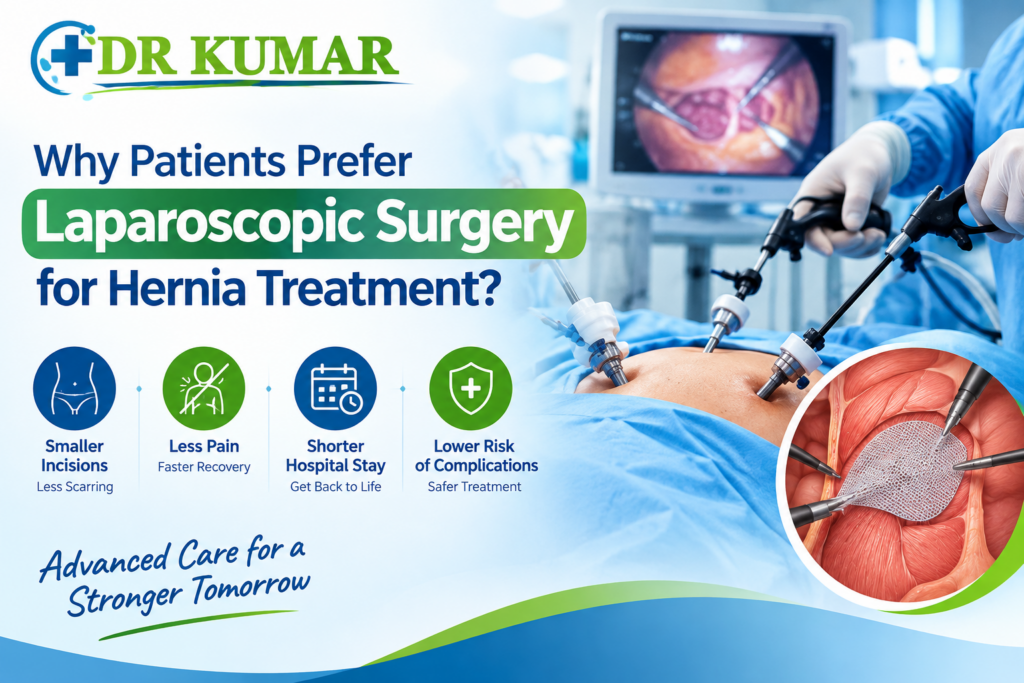
Laparoscopic and robotic repairs use small cuts instead of one large incision. In suitable patients, minimally invasive repair may lead to less discomfort, smaller scars, and quicker return to regular activity. Mayo Clinic notes that minimally invasive hernia repair can result in less discomfort, less scarring, and quicker return to regular activities for some patients. 

Why Size Alone Does Not Tell the Full Story

A small hernia can sometimes cause more trouble than a larger one if the opening is tight and the contents get stuck. A larger hernia may look more alarming, but the risk pattern depends on the type of hernia and its neck, which is the opening through which tissue comes out.

This is why you should not rely only on the number in your scan report. DrKumar hernia specialist usually checks:

  1. The type of hernia, such as inguinal, umbilical, incisional, epigastric, or femoral
  2. The size of the defect
  3. Whether the swelling is reducible
  4. Whether there is pain or heaviness
  5. Whether the hernia is growing
  6. Whether the patient has diabetes, obesity, chronic cough, constipation, prostate issues, or previous surgery
  7. Whether the patient needs laparoscopic, robotic, or open repair

For example, a 2.5 cm umbilical hernia in an adult may be treated differently from a 2.5 cm inguinal hernia. An incisional hernia after previous abdominal surgery may need an even more detailed plan because the surrounding tissue and scar strength also matter.

Common Symptoms of a Medium Sized Hernia

A medium sized hernia may remain painless in the beginning, but symptoms often become more noticeable over time. Patients commonly report a swelling or bulge that appears while standing and reduces while lying down. Some feel dragging, burning, pressure, or heaviness.

You may need to meet DrKumar hernia specialist if you notice:

  1. A visible swelling in the groin, navel, or previous surgery scar area
  2. Pain while coughing, bending, lifting, or climbing stairs
  3. A pulling or heavy feeling by evening
  4. Increase in swelling size over weeks or months
  5. Difficulty doing workouts or physical work
  6. Pain after meals or bloating in some abdominal hernias
  7. Discomfort while wearing belts or tight clothes
  8. A bulge that does not go back fully

A painful or noticeable bulge, especially in the groin, should be assessed by a medical professional. 

Warning Signs That Need Urgent Medical Attention

Not every hernia is an emergency, but certain symptoms should never be ignored. You should seek urgent medical help if the hernia becomes suddenly painful, hard, red, purple, dark, or tender. Nausea, vomiting, fever, inability to pass stool or gas, and severe worsening pain may suggest strangulation or obstruction.

A strangulated hernia can become life-threatening because blood supply to the trapped tissue is cut off. Cleveland Clinic states that strangulated hernia needs emergency care and surgical treatment.

Do not wait at home if these warning signs appear. Even if the hernia was previously called small or medium sized, sudden changes can make it serious.

Why Early Consultation Helps

Many patients delay treatment because the swelling is not very painful. Some try belts, home remedies, or rest. These may give temporary comfort, but they do not close the muscle defect. A hernia is a mechanical problem. Once there is a defect in the abdominal wall, it generally needs a proper surgical opinion.

Early consultation with DrKumar hernia surgeon can help in three ways.

First, it confirms whether the swelling is truly a hernia and what type it is. Second, it helps plan surgery before the hernia becomes larger or more complicated. Third, it gives patients enough time to choose the right treatment method instead of undergoing emergency surgery.

For patients searching for hernia surgery in Chennai, early planning may also mean better preparation, better fitness assessment, and a smoother recovery plan.

Treatment Options for a 2.5 cm Hernia

At Dr Kumar at Billroth Hospitals, treatment is planned based on the patient, not just the scan number. DrKumar hernia specialist may discuss three broad modes of surgery.

1. Laparoscopic Hernia Surgery

Laparoscopic hernia repair is a minimally invasive technique where the surgeon operates through small cuts using a camera and fine instruments. This approach is often preferred for suitable inguinal hernias, recurrent hernias, bilateral hernias, and selected abdominal wall hernias.

DrKumar hernia surgeon places strong emphasis on laparoscopic hernia repair because it can offer smaller scars, less tissue handling, and faster return to normal routine in selected patients. Many working professionals, business owners, and active patients prefer this approach because they want a reliable repair with less interruption to daily life.

2. Robotic Hernia Surgery

Robotic hernia surgery is an advanced minimally invasive approach. It is sometimes called robotic-assisted laparoscopy. It uses small cuts, a high-definition 3D view, and robotic instruments controlled by the surgeon. Cleveland Clinic explains that laparoscopic and robotic surgery allow surgeons to operate through a few small cuts, unlike open surgery which involves one larger incision. 

DrKumar is primarily a laparoscopic and robotic surgeon, so robotic hernia repair is given special attention in suitable cases. Robotic surgery may be useful when precision, suturing, mesh placement, and complex abdominal wall handling are important. It can be especially helpful for selected ventral, incisional, recurrent, and abdominal wall hernias.

Patients often ask whether robotic surgery is better for every hernia. The answer depends on the type of hernia, body structure, previous surgeries, cost factors, and clinical findings. DrKumar hernia specialist explains these points clearly during consultation so that the patient understands why a specific method is recommended.

3. Open Hernia Surgery

Open hernia surgery is the traditional method where the repair is done through a larger incision over the hernia site. It is still a valuable option in some cases, especially when the hernia is very large, complicated, infected, strangulated, or not suitable for minimally invasive repair.

DrKumar hernia surgeon may recommend open repair when it is safer for the patient. The goal is not to push one technique for everyone. The goal is to choose the right repair for long-term strength, comfort, and safety.

Why Choose DrKumar Hernia Specialist in Chennai?

When people search for a hernia specialist in Chennai, they are usually looking for more than a surgeon. They want someone who can explain the condition clearly, reduce fear, offer advanced treatment options, and guide them through recovery with confidence.

DrKumar at Billroth Hospitals focuses on patient-specific hernia care with strong emphasis on laparoscopic and robotic techniques. His approach is suited for patients who want a modern surgical opinion, clear decision-making, and proper guidance on when surgery is actually needed.

The consultation is especially useful if:

  1. Your scan says 2.5 cm hernia
  2. Your swelling is increasing
  3. You are confused between laparoscopic, robotic, and open surgery
  4. You want to avoid emergency complications
  5. You have a recurrent hernia
  6. You had previous abdominal surgery
  7. You want a second opinion before surgery
  8. You are looking for hernia surgery in Chennai with minimally invasive expertise

Can a 2.5 cm Hernia Be Left Untreated?

Some hernias can be observed for a period if they are small, painless, reducible, and not affecting daily life. But this should be a surgeon-led decision, not a self-made decision. A hernia may stay the same for months, or it may slowly enlarge. Once it grows, surgery may become more complex.

A 2.5 cm hernia is already large enough to deserve evaluation. It may not mean emergency surgery today, but it should not be ignored. If symptoms are present, repair is often the better path.

Recovery After Hernia Surgery

Recovery depends on the type of hernia, size, surgical method, patient health, and work routine. Many patients undergoing laparoscopic or robotic hernia repair return to light activities earlier than those undergoing open surgery, but every recovery plan should be personalised.

DrKumar hernia surgeon usually guides patients on walking, diet, wound care, lifting restrictions, office return, driving, exercise, and follow-up. This matters because good surgery and good recovery discipline both contribute to long-term success.

Patients should avoid comparing their recovery with others. A 2.5 cm inguinal hernia repair and an incisional hernia repair after previous surgery may have very different recovery timelines.

Final Thoughts

So, is 2.5 cm hernia big? It is usually a medium sized hernia, and it deserves proper attention. It may not be an emergency in every case, but it is not something to casually ignore either.

If you have swelling, pain, heaviness, or a scan report mentioning a 2.5 cm hernia, the right next step is to consult DrKumar hernia specialist. Early evaluation can help you understand whether observation, laparoscopic surgery, robotic surgery, or open repair is most suitable for you.

For patients looking for hernia surgery in Chennai, Dr Kumar at Billroth Hospitals offers focused hernia care with special emphasis on laparoscopic and robotic repair. The aim is simple: safe repair, clear guidance, faster recovery where possible, and long-term confidence.

FAQs

1. Is a 2.5 cm hernia considered big?

A 2.5 cm hernia is generally considered a medium sized hernia. It is not very small, but it is not extremely large either. The need for surgery depends on symptoms, location, growth, and risk of complications.

2. Can a 2.5 cm hernia heal without surgery?

A hernia usually does not close on its own because it is a defect in the muscle wall. Some painless hernias may be observed for a while, but this should be decided after evaluation by DrKumar hernia specialist.

3. When should I worry about a 2.5 cm hernia?

You should worry if the hernia becomes painful, hard, tender, red, purple, dark, or does not go back inside. Nausea, vomiting, fever, severe pain, or inability to pass stool or gas needs urgent medical attention.

4. Which surgery is better for a medium sized hernia?

The best option depends on the patient and hernia type. DrKumar hernia surgeon may recommend laparoscopic, robotic, or open surgery. More emphasis is usually given to laparoscopic and robotic approaches when suitable.

5. Who should I consult for hernia surgery in Chennai?

You can consult DrKumar hernia specialist at Billroth Hospitals for evaluation and treatment planning. DrKumar focuses on laparoscopic and robotic hernia surgery, with open repair used when clinically required.

Daycare Hernia Surgery: Procedure, Benefits, Cost & Recovery Timeline (Complete Patient Guide)
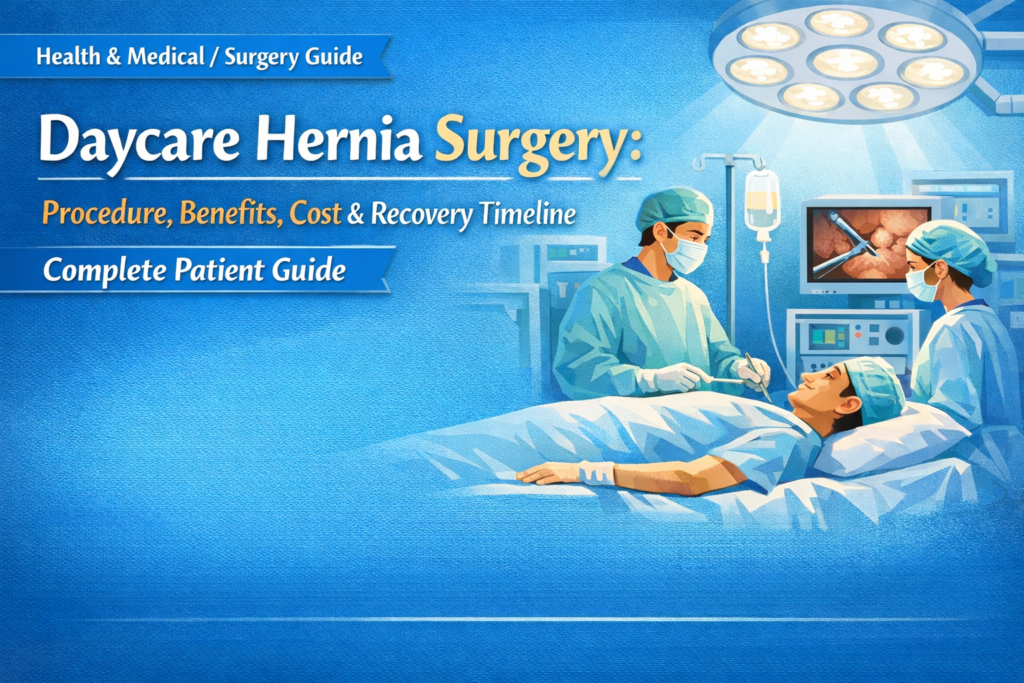
If you have been living with a hernia, you already know how it quietly shapes your day. A dull pull while standing, a visible bulge that appears after meals, discomfort that makes workouts, travel, or even long office hours feel harder than they should. The good news is that hernia treatment has changed dramatically in the last decade. Today, many patients can get treated and go home the same day, safely and comfortably.

This guide explains Daycare Hernia Surgery in plain language: how the procedure works, who it is for, what benefits you can expect, the real factors that influence price, and a recovery timeline that helps you plan your work and family routine.

At Dr Kumar Billroth Hospitals, our aim is simple: give you clinically sound hernia care with the convenience of modern daycare protocols, clear communication, and a recovery plan that fits real life.

Daycare hernia surgery procedure

What is Daycare Hernia Surgery?

Daycare Hernia Surgery (also called same day hernia surgery) means you are admitted, operated, observed, and discharged within a few hours, typically on the same day. It is not “rushed surgery.” It is a structured, safety-first pathway designed for patients who are stable and suitable candidates.

Most common hernias treated through daycare protocols include:

>> Inguinal hernia (groin hernia, common in men)
>> Umbilical hernia (near the belly button)
>> Incisional hernia (at a previous surgery scar)
>> Femoral hernia (more common in women, lower groin)
>> Small ventral hernias (front abdominal wall)

Daycare surgery is possible because techniques are less invasive, anesthesia is smoother, pain control is better, and early mobilization is encouraged.

Why Do People Choose Daycare Hernia Surgery Now

Patients do not just want surgery. They want minimal disruption. A daycare pathway is popular because it is built around the patient’s daily routine.

Here is what that usually looks like:

>> You come in on the day of surgery
>> A planned, standardized operation is done
>> You recover under monitoring
>> You walk, eat light, pass urine, and meet discharge milestones
>> You go home with medicines and a clear recovery plan

This approach is widely used for appropriate hernia cases and helps patients return to normal life faster.

Who is the Right Candidate for Daycare Hernia Surgery?

Many patients qualify, but suitability is decided after clinical evaluation. You may be a good candidate if:

>> The hernia is uncomplicated (not strangulated or obstructed)
>> You do not have unstable heart or lung disease
>> Your diabetes and blood pressure are reasonably controlled
>> You can arrange a responsible adult to accompany you home
>> You can follow post-op instructions and return for review

You may need longer observation or admission if:

>> The hernia is large or complex
>> You have severe sleep apnea or significant medical risks
>> You are on certain blood thinners (still manageable, but needs planning)
>> There is bowel obstruction, severe pain, or trapped intestine

A good hospital does not “push daycare for everyone.” A good hospital offers daycare when it is safe and appropriate.

Types of Hernia Repair Used in Daycare Surgery

Hernias do not heal on their own. They generally enlarge over time and can become painful or complicated. Surgery repairs the defect and reinforces the weakened area.

1. Laparoscopic hernia repair (keyhole surgery)

This is commonly chosen for many groin and selected ventral hernias.

How it works

>> Small incisions
>> A camera guides the repair
>> A mesh is placed to strengthen the area (in most cases)

Common benefits

>> Less early postoperative pain for many patients
>> Faster mobility
>>Smaller scars
>> Often quicker return to work for desk jobs

2. Open hernia repair

This is a proven approach and still the best option in certain situations.

How it works

>> A single incision near the hernia site
>> Repair of the defect
>> Mesh reinforcement in many cases

When it may be preferred

>> Very large hernias
>> Certain recurrent hernias
>> When laparoscopy is not ideal due to anatomy or previous surgeries

Your surgeon will recommend the approach based on hernia type, size, your medical history, and what produces the safest result.

Step-by-step: Daycare Hernia Surgery procedure

Here is the typical patient journey at Dr Kumar Billroth Hospitals.

Step 1: Consultation and evaluation

Your surgeon checks:

>> Hernia type and size
>> Symptoms and lifestyle needs
>> Past surgeries and medical risks
>> Whether you need imaging (often an ultrasound, sometimes a CT scan)

You also get practical guidance on timing. Many patients ask, “Can I wait?” If a hernia is getting bigger or more painful, delaying can make the repair harder. If there are warning signs, delay can be risky.

Step 2: Pre-op workup

Depending on age and health:

>> Blood tests
>> ECG
>> Chest X-ray
>> Anesthesia review

Step 3: Surgery day admission

You arrive fasting, complete admission formalities, and meet the anesthetist and surgeon. The team confirms the procedure plan and answers last-minute questions.

Step 4: Anesthesia and surgery

Most repairs are done under general anesthesia, although some open repairs can be done with spinal or regional anesthesia based on clinical suitability.

Step 5: Recovery and monitoring

You are monitored for:

>> Vital signs
>> Pain and nausea control
>> Ability to walk with support
>> Passing urine
>> Oral intake (fluids, light food)

Step 6: Discharge with a clear plan

You go home with:

>> Pain medicines and sometimes antibiotics
>> Wound care instructions
>> Activity plan and walking targets
>> Diet guidance to prevent constipation
>> Follow-up schedule and red-flag symptoms

Benefits of Daycare Hernia Surgery

Faster return to normal routine

Most patients can walk the same day, climb stairs carefully, and resume light activities soon.

Less exposure to hospital stay

Shorter stays can reduce stress and lower the chance of hospital-acquired infections.

Better patient comfort

Resting at home often improves sleep and appetite compared to an overnight hospital stay.

Standardized protocols

Daycare surgery runs on strict checklists. This reduces variability and improves safety when done in a well-equipped hospital.

Family-friendly planning

With a predictable timeline, many working professionals and caregivers can plan leave, childcare, and travel.

Daycare Hernia Surgery Cost: What Affects Pricing?

Hernia surgery cost is not one flat number because the final expense depends on medical choices and complexity. The biggest cost drivers include:

>> Hernia type and size (simple vs complex)
>> Technique (open vs laparoscopic)
>> Mesh type and fixation method
>> Anesthesia needs
>> Existing medical conditions requiring added monitoring
>> Length of observation and medications
>> Surgeon experience and hospital infrastructure

If you are comparing hospitals, compare like-for-like. A low quote may not include mesh quality, anesthesia, or post-op care.

For transparent guidance, you can check Daycare Hernia Surgery Cost and speak with our team for an estimate based on your diagnosis.

Choosing the Right Surgeon and Hospital Matters

Hernia repair looks straightforward on paper, but outcomes depend heavily on surgical planning, technique, mesh placement, and follow-up care. A “fast surgery” is not the goal. A durable repair with safe recovery is the goal.

What to look for

>> A surgeon who routinely performs hernia repairs (not occasional cases)
>> Experience in both laparoscopic and open techniques
>> Clear counseling about options, risks, and expected recovery
>> A hospital with strong anesthesia support and emergency readiness
>> Clear discharge protocol and follow-up availability

If you are searching for the right specialist, explore Daycare Hernia Surgery Doctor to understand how to choose based on your hernia type and goals.

Recovery Timeline: What Most Patients Experience

Every patient heals at a slightly different pace, but this timeline is a helpful reference.

First 24 hours

>> Mild to moderate pain or tightness is common
>> Walking is encouraged in short intervals
>> Light meals are recommended
>> You may feel groggy from anesthesia
>> Avoid driving, alcohol, or making critical decisions

Tip: Keep pain controlled rather than waiting for it to spike. Take medicines as prescribed.

Day 2 to Day 3

>> Movement becomes easier
>> You can usually do basic home activities
>> Swelling or bruising near the incision can occur, especially in groin hernia repairs
>> Constipation can happen due to pain medication, so hydration and fiber matter

Day 4 to Day 7

>> Most patients feel significantly better
>> Desk work is often possible, depending on pain and commute
>> Walking distance increases steadily
>> Wound care continues as advised

Week 2

>> Many patients resume normal day-to-day routine
>> Light stretching may be allowed
>> Some people still feel pulling sensations with sudden movement, that can be normal early on

Week 3 to Week 4

>> Most patients are comfortable with longer walks and routine activities
>> Driving is usually allowed if pain-free and off strong pain meds
>> Gym is still limited to light activity, as guided by your surgeon

Week 6 and beyond

>> Many patients return to full activity, including workouts and lifting, based on surgeon clearance
>> The repair continues to strengthen over time
>> Proper technique and gradual progression reduce recurrence risk

Important: Heavy lifting too early is one of the most common reasons people feel lingering pain or anxiety about the repair. Follow the plan, not the temptation.

What Can Slow Recovery?

Your recovery can be slower if:

>> You smoke (delays wound healing and increases cough strain)
>> You have uncontrolled diabetes
>> You return to strenuous work too quickly
>> You develop constipation and strain
>> You have a larger or recurrent hernia

The good news is that most of these factors can be managed with preparation and guidance.

Red Flag Symptoms After Hernia Surgery

Call your hospital or surgeon if you notice:

>> Fever or chills
>> Increasing redness, pus, or foul-smelling discharge from the wound
>> Severe pain not controlled by medication
>> Persistent vomiting
>> Increasing swelling with severe tenderness
>> Inability to pass urine
>> Sudden increase in groin or abdominal bulge

Early attention prevents small issues from becoming big problems.

Serving Patients Across Cities: Chennai and Mumbai

Patients often search by location when they want convenience and trust. If you are evaluating options for Daycare hernia repair in Chennai or looking for the Best hernia hospital in Mumbai, focus on surgical expertise, safety protocols, transparent pricing, and follow-up access, not just the lowest quote.

At Dr Kumar Billroth Hospitals, we focus on:

>> Evidence-based surgical decision-making
>> Daycare protocols that prioritize safety
>> Clear discharge instructions with follow-up support
>> Patient education that reduces fear and confusion

Ready to Take The Next Step?

If you have a hernia, the real relief comes from a repair that fits your case, your body, and your daily routine. A proper daycare pathway can mean fewer disruptions and a smoother recovery, when chosen wisely.

Dr Kumar Billroth Hospitals is here to help you move from discomfort and uncertainty to clarity and confidence, with a surgical plan designed around safety, comfort, and long-term results.

FAQs

Is mesh safe?

For most hernia repairs, mesh reinforcement lowers the risk of recurrence compared to tissue-only repair, especially in adult groin and ventral hernias. The mesh choice and placement technique matter, so surgeon experience is key.

Will the hernia come back?

Recurrence risk depends on hernia size, repair technique, patient factors (smoking, obesity, diabetes), and post-op strain. With proper repair and recovery discipline, most patients do very well.

Can I do daycare hernia repair if I live far away?

Often yes, if you can arrange safe travel and have a companion. Some patients choose to stay nearby for one night for comfort. Your surgeon will advise what is best for you.

How soon can I return to office?

Many patients with desk jobs return within 3 to 7 days, depending on pain and commute. Jobs involving lifting require longer restriction, often 4 to 6 weeks or as advised.

Call Now Button