
Hernias in Pregnancy Are Nothing To Be Afraid Of

Pregnancy brings excitement, anticipation, and a long list of physical changes that can feel unfamiliar. For some women, one of those changes includes noticing a small bulge in the abdomen or groin, often diagnosed as a hernia. The word itself can sound alarming. It is easy to assume something serious is going wrong.

The truth is far more reassuring.

Hernias during pregnancy are not uncommon, and in most cases, they are manageable, safe, and treatable. With the right guidance from an experienced Hernia specialist like Dr Kumar at Billroth Hospital, women can move through pregnancy with confidence and clarity.

This article is designed to clear confusion, ease anxiety, and help you understand what really matters if a hernia shows up during pregnancy.

Hernias in Pregnancy Are Nothing To Be Afraid Of

Understanding Hernias in Simple Terms

A hernia happens when an internal organ or tissue pushes through a weak spot in the muscle wall. During pregnancy, the abdominal wall stretches to accommodate the growing baby. This natural stretching can make certain areas more vulnerable.

The most common types seen in pregnancy include:

>> Umbilical hernia, near the belly button

>> Inguinal hernia, in the groin area

>> Incisional hernia, especially in women who have had previous abdominal surgery

Many women first notice a soft swelling that becomes more visible when standing, coughing, or straining. It may disappear when lying down.

This is often harmless.

Why Hernias Occur During Pregnancy

Pregnancy creates the perfect environment for a hernia to appear. It is not because something has gone wrong. It is simply how the body adapts.

Several factors contribute:

>> Increased abdominal pressure as the baby grows

>> Hormonal changes that soften connective tissues

>> Previous pregnancies or surgeries

>> Natural weakness in certain muscle areas

For many women, the hernia may have been present even before pregnancy but remained unnoticed.

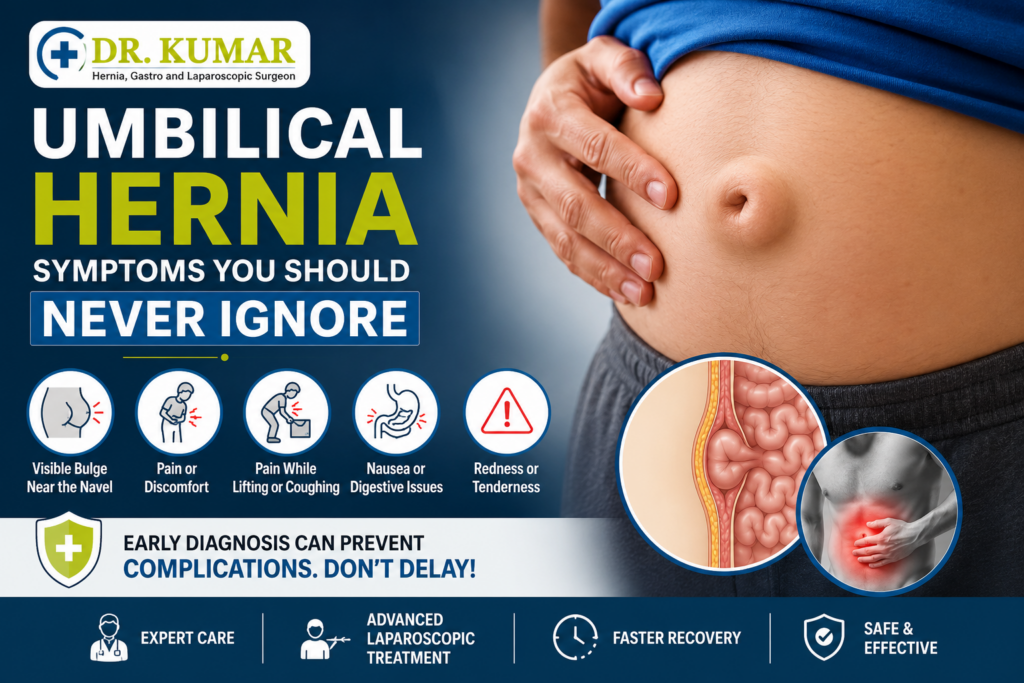
Signs You Should Pay Attention To

Most pregnancy-related hernias are mild and do not cause significant discomfort. Still, it helps to know what to watch for.

Common symptoms include:

>> A visible or palpable bulge

>> Mild discomfort or heaviness

>> Pain that increases with activity

There are rare situations where a hernia can become complicated. Immediate medical attention is needed if you notice:

>> Severe pain

>> Redness or tenderness over the bulge

>> Nausea or vomiting

>> A bulge that cannot be pushed back in

In such cases, consulting an experienced hernia specialist like Dr Kumar hernia surgeon

becomes important.

The Emotional Side of Diagnosis

Many expecting mothers worry that a hernia might affect their baby or lead to complications during delivery.

Let us address this clearly.

In most cases, a hernia does not harm the baby. It also does not interfere with normal pregnancy progression. The anxiety often comes from lack of information rather than actual risk.

When patients consult Dr Kumar hernia specialist, one of the first things he focuses on is reassurance. Understanding your condition reduces fear and helps you make calm, informed decisions.

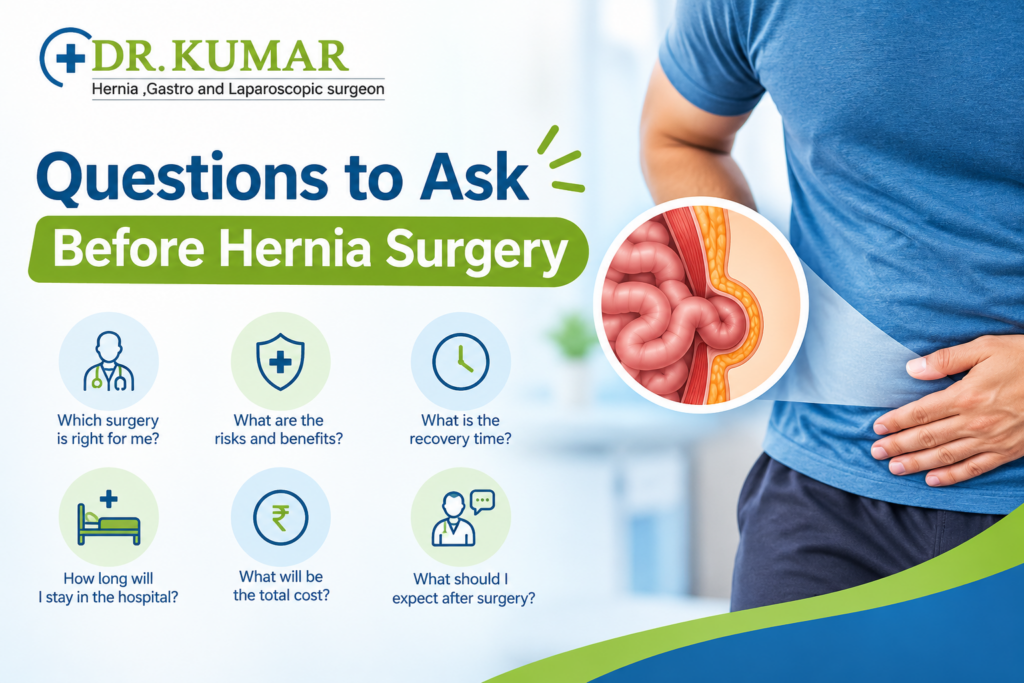
Do All Hernias Need Surgery During Pregnancy

No. This is one of the most important points.

Most hernias detected during pregnancy do not require immediate surgery. Doctors often recommend a conservative approach unless complications arise.

Management may include:

>> Monitoring the hernia

>> Avoiding heavy lifting

>> Maintaining healthy weight

Surgery during pregnancy is considered only in emergencies. Otherwise, it is usually planned after delivery when the body has recovered.

When Surgery Becomes Necessary

There are situations where surgical intervention becomes necessary. These include:

>> Strangulated hernia where blood supply is compromised

>> Severe pain affecting daily life

>> Rapidly enlarging hernia

In such cases, timing and technique become crucial.

This is where the expertise of Dr Kumar hernia surgeon makes a difference. The goal is always to ensure both maternal and fetal safety while addressing the issue effectively.

Types of Hernia Surgery You Should Know

Understanding the available surgical options can make a big difference in how confident you feel about treatment.

Modern hernia repair is not limited to one method. There are multiple approaches:

1.  Laparoscopic Surgery

This is a minimally invasive technique where small incisions are used along with a camera and specialized instruments.

Benefits include:

>> Less pain after surgery

>> Faster recovery

>> Minimal scarring

>> Shorter hospital stay

Dr Kumar hernia specialist often recommends laparoscopic repair for most cases because it allows precise correction with minimal disruption.

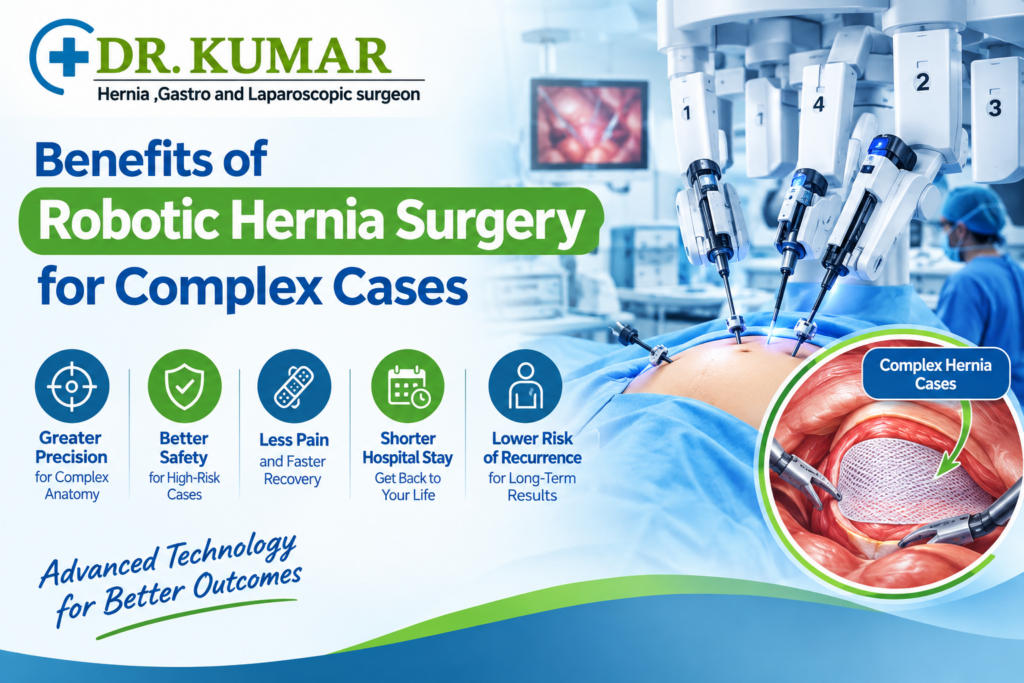
2.  Robotic Hernia Surgery

Robotic surgery represents the latest advancement in hernia treatment. It combines the benefits of laparoscopy with enhanced precision and control.

Key advantages:

>> Greater accuracy in complex cases

>> Better visualization for the surgeon

>> Reduced post operative discomfort

>> Faster return to normal activities

As a specialist with a strong focus on advanced techniques, Dr Kumar hernia surgeon frequently uses robotic surgery when it offers better outcomes.

Patients often feel reassured knowing that such advanced options are available.

3.  Open Surgery

Open surgery is the traditional method where a larger incision is made to repair the hernia. It is still relevant in certain cases, such as:

>> Very large hernias

>> Complicated or recurrent hernias

>> Situations where minimally invasive surgery is not suitable

While recovery may take longer compared to laparoscopic or robotic approaches, open surgery remains a safe and effective option when needed.

Can You Have a Normal Delivery With a Hernia

Yes, in most cases.

A hernia does not automatically mean you need a cesarean section. Many women deliver vaginally without complications.

The decision depends on:

>> Size and location of the hernia

>> Presence of symptoms

>> Obstetric factors

Your obstetrician and hernia specialist work together to decide what is safest.

Dr Kumar hernia surgeon often collaborates with maternity teams to ensure a smooth plan is in place well before delivery.

Post Pregnancy Treatment Planning

Once the baby is born, attention can shift fully toward treating the hernia if needed. The timing of surgery depends on:

>> Recovery from childbirth

>> Overall health

>> Severity of the hernia

Many women choose to address the hernia a few months after delivery.

At this stage, minimally invasive approaches such as laparoscopic or robotic surgery are often preferred for quicker recovery, especially for new mothers managing a newborn.

Why Choosing the Right Specialist Matters

Not all hernia cases are the same. Pregnancy adds another layer of complexity that requires careful handling.

Choosing an experienced Hernia specialist like Dr Kumar hernia surgeon ensures:

>> Accurate diagnosis

>> Safe decision making during pregnancy

>> Access to advanced surgical options

>> Personalized treatment planning

Patients often look for someone who understands both the medical and emotional aspects of their condition.

That balance is what builds trust.

Real Concerns Women Often Have

Let us address some common questions directly.

Will the hernia get worse during pregnancy?

It may increase slightly due to pressure, but not always. Monitoring is usually enough.

Can I exercise?

Light activity is generally safe. Avoid strain or heavy lifting.

Will it affect my baby?

No. Hernias typically do not impact the baby.

Is surgery painful?

Modern techniques like laparoscopic and robotic surgery significantly reduce discomfort and recovery time.

A Calm, Practical Approach to Care

The biggest mistake many people make is reacting with fear instead of information. A hernia in pregnancy is something to be aware of, not something to panic about.

With proper monitoring and guidance from a trusted hernia expert like Dr Kumar hernia specialist, most women go through pregnancy without major issues.

When treatment is required, today’s surgical options offer safe and effective solutions with minimal disruption to your life.

A Final Word for Expecting Mothers

Pregnancy is a time when every small change can feel overwhelming. Hearing the word hernia might add to that stress.

Take a step back and look at the bigger picture.

Most hernias during pregnancy are manageable. They rarely pose serious risks. And when treatment is needed, modern medicine offers solutions that are safe, precise, and tailored to your needs.

If you ever feel unsure, speaking to an experienced professional like Dr Kumar hernia surgeon can give you clarity and peace of mind.

You deserve to enjoy your pregnancy with confidence, not fear. And with the right care, you absolutely can.

FAQs

1.  Are hernias during pregnancy dangerous?

In most cases, hernias during pregnancy are not dangerous. They are usually mild and can be safely monitored under the care of an Hernia expert like Dr Kumar.

2.  Can a hernia affect my baby during pregnancy?

No, a hernia typically does not affect the baby. It mainly involves the mother’s abdominal wall and is rarely linked to fetal complications.

3.  Do I need surgery for a hernia while pregnant?

Most hernias do not require surgery during pregnancy. Dr Kumar hernia specialist usually recommends observation unless there is severe pain or complications.

4.  What are the safest hernia surgery options after pregnancy?

Laparoscopic Hernia surgeries are commonly preferred due to faster recovery and less pain. Dr Kumar hernia surgeon often recommends these advanced techniques.

5.  Can I have a normal delivery if I have a hernia?

Yes, many women with hernias have normal vaginal deliveries. The decision depends on your condition and is best guided by your Obstetrics doctor and hernia specialist like Dr Kumar at Billroth Hospitals.

What to Expect After Inguinal Hernia Repair: Week-by-Week Healing Guide

Recovering from an inguinal hernia surgery is often filled with questions that go beyond the operation itself. Most patients are not worried about the procedure alone. They want to know how soon they can walk normally, when the pain will go away, and how quickly life will return to normal.

If you are preparing for surgery or have recently undergone one, understanding the recovery process can make a big difference. This guide is written from real patient experiences and clinical insights followed by Dr Kumar hernia surgeon at Billroth Hospital, with a strong focus on laparoscopic and robotic surgery for faster healing and better comfort.

After Inguinal Hernia Repair

What Is an Inguinal Hernia and Why Is Surgery Needed

An inguinal hernia happens when a portion of tissue or intestine pushes through a weak area in the lower abdominal wall, usually near the groin. It often appears as a visible bulge in the Groin that may increase when you cough, bend, or lift something heavy.

In children, parents frequently search for the causes of inguinal hernia in child. In most such cases, it is present from birth due to incomplete closure of the abdominal wall. In adults, common causes include strain from heavy lifting, obesity, chronic coughing, or even long-term constipation.

Unlike some other conditions, hernias do not heal on their own. Surgery is the only effective and permanent solution. The good news is that with modern surgical techniques, recovery is much smoother than what patients expect.

Surgical Options That Influence Recovery

Before understanding recovery, it is important to know that the method of surgery plays a major role in how quickly you heal.

Laparoscopic Surgery

This minimally invasive technique involves small cuts and the use of a camera. Patients experience less pain and recover faster. Dr Kumar Inguinal hernia specialist, often recommends this for suitable cases because of its quicker healing time.

Robotic Surgery

Robotic surgery is an advanced form of laparoscopic surgery. It allows better precision and control, especially in complex or recurrent hernias. Many patients treated by Dr Kumar hernia surgeon benefit from reduced tissue damage and smoother recovery through this approach.

Open Surgery

Open surgery involves a larger incision. While it is still necessary in certain situations, it usually comes with a slightly longer recovery period.

If you are researching inguinal hernia surgery cost, keep in mind that the surgical approach, hospital stay, and complexity of the case can all influence the overall expense.

Week-by-Week Recovery Timeline

Each patient heals at a slightly different pace, but this week-by-week breakdown gives a realistic picture of what most people experience after surgery.

Week 1: Immediate Recovery Phase

The first few days after surgery are all about rest and careful movement. You may feel:

>> Mild to moderate pain around the surgical site

>> Tightness or pulling sensation in the groin

>> Slight swelling or bruising

Patients who undergo laparoscopic or robotic surgery with Dr Kumar hernia surgeon usually report less discomfort compared to those who have open surgery.

What helps during this stage:

>> Taking prescribed pain medication on time

>> Walking short distances inside your home

>> Supporting the abdomen while coughing or sneezing

Many patients worry whether a larger hernia means more pain. Questions about inguinal hernia size for surgery are common, but with modern techniques, even larger hernias can be repaired with manageable discomfort.

Week 2: Gradual Improvement

By the second week, you will notice visible progress. Changes you may experience:

>> Pain reduces significantly

>> Movement becomes easier

>> Energy levels start improving

At this stage, patients begin to feel more independent. However, it is important not to rush into heavy activities.

What you should focus on:

>> Light walking to improve circulation

>> Avoiding lifting heavy objects

>> Maintaining proper hygiene around the incision area

>> Resume desk work or light professional duties

>> Car driving start distance

If you initially searched for an inguinal hernia surgeon near me, this is the time when follow-up visits play a key role. A skilled surgeon like Dr Kumar hernia specialist ensures that healing is progressing without complications.

Week 3: Getting Back to Routine

This is the phase where most patients feel a sense of normalcy returning. You may be able to:

>> Have normal diet

>> Walk longer distances without discomfort

>> Sleep without interruption

>> Regular executive work

Patients treated with robotic or laparoscopic techniques by Dr Kumar hernia surgeon often find themselves more comfortable during this stage compared to traditional recovery timelines.

Even though you feel better, internal healing is still ongoing. Avoid:

>>Heavy lifting

>>Sudden bending or twisting

>>Strenuous physical activities

Week 4: Building Strength

By the fourth week, the body has healed significantly on the outside, but internal tissues are still strengthening.

At this point:

>>The surgical wound looks almost normal

>>Pain is minimal or completely gone

>>Daily routines become easier

This is a good time to slowly increase your level of activity. Recommended actions:

>> Gradual increase in walking distance

>> Light stretching if approved by your doctor

>> Returning to driving two wheelers if comfortable at end of four weeks

Patients often feel tempted to return to full activity at this stage. However, guidance from Dr Kumar hernia specialist is crucial to avoid setbacks.

Week 5 to Week 6: Near Full Recovery

This is where most patients feel like themselves again. You may:

>> Resume moderate exercise

>> Return to most daily activities

>> Feel confident in movement

Those who undergo laparoscopic or robotic procedures usually reach this stage faster and with fewer complications.

Dr Kumar hernia surgeon typically advises patients to reintroduce physical activity gradually rather than jumping straight into intense workouts.

Tips for a Smooth Recovery

A successful recovery is not just about time. It depends on how well you follow post-surgery care.

Here are some practical tips:

>> Stay active with light walking

>> Avoid constipation by maintaining a healthy diet

>> Drink plenty of water

>> Follow your doctor’s advice strictly

Patients who follow these steps under the guidance of Dr Kumar hernia surgeon often experience smoother healing and better long-term results.

Common Questions Patients Ask

How long does pain last after surgery?

Pain usually reduces significantly within the ten days and continues to improve thereafter.

When can I return to work?

Most patients can return to desk jobs within 10 days. Physically demanding jobs may require more time.

Is recurrence common?

Recurrence is rare when surgery is performed by an experienced Hernia surgeon like Dr Kumar hernia specialist and proper precautions are followed.

Why Choosing the Right Surgeon Matters

Many patients searching for an inguinal hernia surgeon near me often focus on location alone. However, expertise and experience are far more important.

Choosing the best inguinal hernia surgeon like Dr Kumar ensures:

>> Accurate diagnosis

>> Advanced surgical techniques

>> Faster recovery

>> Lower risk of complications

Dr Kumar hernia surgeon at Billroth Hospital is known for his expertise in laparoscopic and robotic hernia repair. His approach focuses on precision, patient comfort, and long-term success.

A Patient-Centered Approach to Hernia Care

What sets a specialist apart is not just surgical skill but also patient care.

Dr Kumar hernia specialist believes in:

>> Explaining the condition clearly to patients

>> Offering the most suitable surgical option

>> Supporting patients throughout recovery

This approach helps patients feel confident and informed at every stage of their journey.

Final Thoughts

Recovering from an inguinal hernia surgery does not have to be stressful or confusing. When you understand what to expect week by week, the entire process becomes easier to manage.

From the initial days of rest to the gradual return to normal life, every stage of recovery has its own importance. The key lies in following the right guidance and choosing an experienced surgeon.

If you are planning your surgery or looking for expert care, consulting Dr Kumar hernia surgeon can make a meaningful difference. With advanced laparoscopic and robotic techniques, recovery becomes smoother, faster, and far more comfortable than most patients expect.

FAQs

How long does it take to recover from inguinal hernia surgery?

Most patients recover within 3 to 4 weeks. Those undergoing laparoscopic or robotic procedures with Dr Kumar hernia surgeon often heal faster with less discomfort.

What activities should I avoid after inguinal hernia surgery?

Avoid heavy lifting, strenuous exercise, and sudden movements for at least 4 weeks. Gradual activity is advised for safe healing.

Is laparoscopic or robotic surgery better for inguinal hernia?

Both are advanced techniques. Laparoscopic and robotic surgeries offer faster recovery and less pain compared to open surgery. Dr Kumar hernia specialist, often recommends these methods based on patient needs.

What are the causes of inguinal hernia in child?

In children, an inguinal hernia is usually congenital. It occurs when the abdominal wall fails to close properly before birth.

How do I choose the best inguinal hernia surgeon?

Look for experience, specialization in laparoscopic and robotic techniques, and patient outcomes. Consulting Dr Kumar hernia surgeon, ensures expert care and smoother recovery.

When can I get back to work?

Normally a week to ten days, you can get back to work.

When can I climb stairs?

Seven days to ten days

Why Robotic AWR Surgery Is Transforming Complex Hernia Treatment

Hernia treatment has evolved significantly over the years. While many hernias can be treated with standard repair techniques, some cases are far more challenging. These are known as complex hernias and often require a specialized approach called Abdominal Wall Reconstruction (AWR).

With advancements in surgical technology, robotic AWR surgery is changing how these complex cases are treated. It offers better precision, faster recovery, and improved outcomes compared to traditional methods. For patients dealing with recurrent, large, or complicated hernias, this modern approach is making a real difference.

Robotic AWR Surgery Is Transforming Complex Hernia Treatment

What Is a Complex Hernia?

A hernia develops when an internal organ or tissue bulges out through a weakened area in the abdominal wall. While small hernias are easier to treat, complex hernias present additional challenges.

A hernia is considered complex when:

  • It is very large or long-standing
  • It has come back after previous surgery
  • There is muscle weakness or loss of abdominal wall strength
  • There are infections or poor wound healing
  • It is associated with conditions like obesity or multiple surgeries

Such cases require more than a simple repair. They need reconstruction of the abdominal wall, which is where AWR becomes essential.

What Is Abdominal Wall Reconstruction (AWR)?

Abdominal Wall Reconstruction is an advanced surgical procedure used to rebuild and strengthen the abdominal wall. It is not just about closing a defect. It involves restoring function, structure, and stability.

AWR may include:

  • Repositioning muscles
  • Strengthening the abdominal wall with mesh
  • Releasing tight muscle layers for better closure
  • Correcting previous failed repairs

This procedure can be performed using three main approaches:

  1. Laparoscopic surgery
  2. Robotic surgery
  3. Open surgery

Today, there is a clear shift towards minimally invasive techniques, especially robotic surgery, for better outcomes in complex cases.

Evolution of Hernia Surgery: From Open to Robotic

Open Surgery

Open surgery was the traditional method for hernia repair. It involves a larger incision, direct access to the hernia, and manual repair. While it is still useful in certain situations, it comes with:

  • More post-operative pain
    • Longer hospital stay
    • Higher risk of infection
    • Slower recovery

Laparoscopic Surgery

Laparoscopic surgery brought a major improvement. It uses small incisions and a camera to perform the surgery. Benefits include:

  • Less pain
    • Faster recovery
    • Smaller scars
    • Reduced complications

Robotic Surgery

Robotic surgery takes laparoscopic techniques to the next level. It gives the surgeon enhanced control, precision, and visualization. This is especially important in AWR, where accuracy is critical.

Why Robotic AWR Surgery Is a Game Changer

Robotic AWR is not just another technique. It represents a major step forward in treating complex hernias.

1.  Better Precision and Control

Robotic systems provide a high-definition 3D view of the surgical area. The instruments move with greater flexibility than the human hand. This allows the surgeon to perform delicate steps with accuracy.

In complex hernias, where tissues are scarred or distorted, this precision makes a significant difference.

2.  Improved Muscle Reconstruction

A key part of AWR is restoring the abdominal wall structure. Robotic surgery allows better handling of muscle layers and advanced techniques like:

  • TAR (Transversus Abdominis Release)
    • eTEP (Extended Totally Extraperitoneal Repair)

These techniques help achieve strong and durable repairs with better functional outcomes.

3.  Smaller Incisions, Less Pain

Robotic AWR is minimally invasive. It uses small incisions instead of large cuts. This results in:

  • Reduced pain after surgery
    • Minimal blood loss
    • Lower risk of wound complications

Patients are more comfortable during recovery compared to open surgery.

4.  Faster Recovery and Shorter Hospital Stay

Most patients who undergo robotic AWR recover faster. They can:

  • Start walking earlier
    • Resume daily activities sooner
    • Return to work in a shorter time

Hospital stay is usually shorter compared to open procedures.

5.  Lower Risk of Complications

Robotic surgery reduces the chances of:

  • Infection
    • Hernia recurrence
    • Wound-related issues

This is particularly important in patients with previous failed surgeries or large hernias.

6.  Better Outcomes in Complex Cases

Complex hernias often involve multiple challenges such as scar tissue, weak muscles, and large defects. Robotic AWR allows surgeons to address these issues effectively, leading to better long-term results.

Who Needs Robotic AWR Surgery?

Not every hernia requires AWR. However, robotic AWR is highly beneficial in:

  • Large abdominal hernias
    • Recurrent hernias after previous surgery
    • Hernias with loss of domain
    • Multiple or combined hernias
    • Weak abdominal wall due to prior surgeries

Patients with these conditions benefit the most from advanced reconstruction techniques.

Role of Advanced Pre-Operative Techniques

In complex hernia cases, preparation is just as important as surgery. Modern AWR may involve:

  • Botox injections to relax abdominal muscles

These methods improve surgical outcomes and make closure easier, especially in large hernias.

Recovery After Robotic AWR Surgery

Recovery after robotic AWR is generally smoother compared to open surgery.

  • Hospital stay is usually a few days
  • Pain is manageable with medication
    • Light activities can begin within a week
    • Full recovery may take a few weeks

Patients are advised to avoid heavy lifting and follow post-operative guidance carefully to ensure proper healing.

Laparoscopic vs Robotic vs Open AWR Surgery

Understanding the difference helps patients make informed decisions:

ApproachKey FeaturesRecoveryBest Use
  LaparoscopicMinimally invasive, small incisions  Fast  Moderate to complex hernias
    Robotic  High precision, 3D vision, advanced control    Faster    Complex and recurrent hernias
  OpenTraditional method, large incision  Slower  Very large or complicated cases when required

While all three approaches have their place, laparoscopic and robotic methods are preferred whenever feasible, with robotic surgery offering added advantages in complex AWR.

Dr Kumar’s Approach to AWR at Billroth Hospitals

At Billroth Hospitals, we focus on delivering advanced and patient-centered care for complex hernia cases.

Under the expertise of Hernia Specialist Dr. Kumar, we specialize in laparoscopic and robotic AWR surgery, ensuring that patients receive the most effective and least invasive treatment possible. With over 29 years of experience and thousands of successful surgeries, we handle even the most challenging hernia cases with confidence.

Dr Kumar routinely perform advanced techniques such as TAR, eTEP, and abdominal wall reconstruction using modern technology. Our approach also includes pre-operative optimization methods like Botox and PPP for better outcomes in large hernias.

Our goal is simple. Provide safe surgery, faster recovery, and long-term results while keeping patient comfort and safety as the top priority.

Conclusion

Complex hernias require more than routine treatment. They need expertise, planning, and the right surgical approach and a Hernia Specialist like Dr Kumar. Abdominal Wall Reconstruction has become the standard for managing these cases, and robotic surgery is taking it further.

With better precision, reduced pain, faster recovery, and improved long-term outcomes, robotic AWR is transforming how complex hernias are treated today.

For patients, this means safer surgery, quicker return to normal life, and a more reliable solution to a challenging condition.

Frequently Asked Questions

1.  What is AWR surgery and when is it needed?

AWR (Abdominal Wall Reconstruction) is an advanced procedure used to repair complex hernias. It is needed when the hernia is large, recurrent, or associated with weak abdominal muscles, previous failed surgeries, or loss of domain.

2.  Is robotic AWR surgery better than laparoscopic or open surgery?

Robotic AWR offers better precision and control compared to laparoscopic surgery and is less invasive than open surgery. It usually results in less pain, faster recovery, and improved outcomes, especially in complex hernia cases.

3.  How long does it take to recover after robotic AWR surgery?

Most patients recover faster after robotic AWR compared to open surgery. Light activities can begin within a week, while full recovery may take a few weeks depending on the complexity of the hernia.

4.  Is AWR surgery safe?

Yes, AWR surgery is safe when performed by an experienced surgeon. Robotic and laparoscopic approaches further reduce risks such as infection, complications, and recurrence compared to traditional open surgery.

5.  Will the hernia come back after AWR surgery?

AWR is designed to provide a strong and durable repair. While no surgery guarantees zero recurrence, advanced techniques used in laparoscopic and robotic AWR significantly reduce the chances of the hernia returning.

WHEN DOES DR KUMAR USE THE eTEP TECHNIQUE FOR HERNIA REPAIR?

Herniais one of the most common surgical conditions seen inboth men and womenacross different age groups. Usually, it presents as abulge in the area that may increase with standing, coughing, or straining.

While early cases may appear mild, Hernia is a structural problemthat doesnot heal on its own. Over time, it can increase in size and lead to complications.

Modern hernia care has moved towards advanced and minimally invasive techniques. Among these advanced methods is eTEP Hernia Repair, which has gained importance as a reliable and effective approach. Many patients want to know when this technique is advised and whether it is suitable for their condition.

This article explains about the pros and cons of eTEP technique, and when hernia surgeons like Dr. Kumar use the eTEP technique in hernia surgery, how it compares with other approaches, and what factors are considered before choosing this method.

DR KUMAR one of the Top Hernia Surgeon in Chennai and an expert in eTEP technique uses this technique inComplex Hernia due to Enhanced vision,safety, Precision and Faster Recovery for the Patients and he explains in this article about this method and Benefits it offers over the Technique.

WHAT IS eTEP/ UNDERSTANDING THE ETEP HERNIA REPAIR

The term eTEP Hernia Repair stands for Enhanced Totally Extraperitoneal repair. It is an advanced Laparoscopic method used for Inguinal hernia, Umbilical and Ventral hernia surgery. It is a modified and improved version of the earlier technique TEP- Total Extra peritoneal Repair, In this extraperitoneal approach, surgery is done outside the abdominal cavity,( Peritoneal cavity) and hence the intestines and internal organs are not disturbed, leading to early return of intestinal functions.

  • Better visualisation
  • eTEP provides a bigger, larger field and a better view of the anatomy, making it easier for hernia repair.
  • The hernia defect isrepaired with a larger mesh.
  • A mesh is placed into the preperitoneal space to strengthen the abdominal wall.
  • This eTEP technique is an improvement over earlier Laparoscopic TEP methods and provides better working space and visibility for the surgeon, enabling the surgeon to deploy a bigger mesh, leading to less recurrence.

HISTORY OF eTEP FOR HERNIA

Initially, open surgery was the method used for hernia repair. With the onset of the Laparoscopic era, minimal access surgery Laparoscopic Hernia Surgery was started. In the Laparoscopic method, the preperitoneal plane was dissected and a mesh was placed in the preperitoneal plane. This Laparoscopic Method initially had two approaches:

TAPP: Transabdominal Preperitoneal, where the peritoneal cavity is entered and then a preperitoneal plane is created to place the mesh.

Extraperitoneal approach: In this, the peritoneal cavity is not entered and the peritoneum is intact and Surgery is done outside the Peritoneal Cavity .

Initially, this technique was called TEP: Total Extra-Peritoneal Repair is done only for inguinal hernia, especially bilateral, and the initial port was placed just below the umbilicus for the camera. Hence the field which could be dissected was very small.

Below the Umbilicus.Since the space was very narrow [in TEP], there was no clear vision and only a smaller size of mesh could be kept, leading to more recurrence.

To increase the vision and to increase the field, Dr. Jorge Daes invented the technique called eTEP Enhanced or Extended TEP where the initial port is inserted well above the umbilicus, leading to a bigger area to be dissected, leading to better vision,and bigger mesh placement.

THE EVOLUTION OF eTEP

Hernia Surgery→ Open Hernia Surgery→

            →Laparoscopic Hernia Surgery→1) TAPP

2)TEP→eTEP

eTEP – Initially used for ventral hernia, eTEP quickly gained popularity for inguinal hernia surgery as well.

WHY DR KUMAR PREFERS THE eTEP TECHNIQUE

Dr. Kumar, one of the Top Hernia Surgeons in Chennai, India, prefers the eTEP technique for hernia surgery due to the following reasons:

Minimally Invasive Procedure: eTEP requires only small incisions, leading to minimal scarring, faster recovery, and lesser pain.

Lesser Pain: The eTEP technique gives very less pain, leading to better postoperative recovery.

Lower Recurrence: Since a bigger mesh is used, it reduces the rate of recurrence.

Better Vision: Since the field dissected is big, it leads to better vision and less chance of complications.

The eTEP approach gives Dr. Kumar a larger working area and better vision, which is particularly beneficed

Lower Complication Rate: Since this technique provides a broader field and better visibility, the complication rate is very low.

Early Recovery: Due to less pain, there is early recovery and patients are able to work even on the same day

minimally invasive techniques

WHEN DOES DR. KUMAR ADVISE THE ETEP TECHNIQUE?

  • Bilateral Inguinal Hernia
  • Large Inguinal Hernia
  • Ventral Hernias
  • Large Umbilical Hernia where the defect size is more than 5 cm
  • Need for Minimally Invasive Surgery: Smaller incisions, lesser pain, and faster return to normal life. eTEP meets these expectations as it is a minimally invasive approach.
  • Patients who need faster recovery: Pain is very low compared to other approaches; hospital stay is shortened, and return to work is quicker.
  • Patients suitable for Laparoscopic or Robotic surgery.
  • Laparoscopic eTEP (Primary Approach)
  • Standard and widely used.
  • Proven results.
  • Good balance of cost and outcomes.

HOW IS eTEP PERFORMED

The eTEP Technique is performed under General Anesthesia.A small key hole incision is made well above the Umbilicus usually to left or the right of midline.

An Optical port is introduced to piece the Anterior Rectus Sheath,split the Rectus muscle and reach the plane just Anterior to the Posterior Rectus Sheath.

Gas is inflated in this plane and Retro Rectus plane is developed .Blunt dissection is done to increase the space.

Under vision ,further ports are introduced.The Hernia is dissected and sac, and the contents are pushed down, the Defect is closed ,then a mesh is placed and secured.

ROBOTIC eTEP (ADVANCED APPROACH)

  • Better precision and control.
  • Useful in complex hernias.
  • Improved precision for the surgeon.

WHEN eTEP MAY NOT BE RECOMMENDED

Even though eTEP is advanced, it may not be suitable in all cases.

Surgeons may avoid it in:

  • Patients unfit for general anesthesia.
  • Severe medical conditions.
  • Certain complicated abdominal wall with multiple previous surgeries.
  • In such cases, other approaches are considered for safety.

WHAT ARE THE ADVANTAGES OF eTEP HERNIA SURGERY?

Hernia surgeons like Dr. Kumar recommend eTEP because of its clinical benefits

  • Surgery is done outside the abdominal cavity
  • Lower risk of bowel injury
  • Reduced chance of adhesions
  • Less postoperative pain
  • Faster recovery
  • Better mesh placement
  • Lower recurrence rate
  • These advantages make it the most preferred hernia surgery repair technique in modern practice.

WHAT IS TAR TECHNIQUE?

Transversus Abdominis Release is another advanced technique used in Hernia Surgery as an extension to eTEP (Enhanced-View Totally Extraperitoneal).

In this technique, the Transversus Abdominis muscle is released from the insertion leading to more length of tissue — the Posterior Rectus Sheath (PRS) and peritoneum to aid in PRS and peritoneal closure. It can be done in the upper part or the lower part to aid in PRS closure.

WHEN IS TAR TECHNIQUE USED?

Hernia Specialist, Dr Kumar is well versed in TAR Technique and uses it in the following Situations,

TAR is used in bigger hernias where the defect is more than 10 cm.In these hernias, the initial approach is the eTEP technique, but when we find that the PRS (Posterior Rectus Sheath) and peritoneum cannot be approximated in the midline and we need extra length to close .

In such cases, TAR is done to give more length to the PRS (Posterior Rectus Sheath) and peritoneum to aid in closure.

TAR can be done in the upper part or the lower part as necessary to aid closure, and care should be taken to avoid injury to the neurovascular bundle.

HOW HERNIA SURGEONS DECIDE THE BEST TECHNIQUE?

Choosing the right method depends on:

  • Type and size of the hernia
  • Whether it is a primary or recurrent hernia
  • Patient’s age and health
  • Surgeon’s expertise
  • Availability of advanced facilities

An experienced Hernia Surgeon, like Dr. KumarBillroth Hospital, will evaluate all these factors before recommending the next option.

WHAT PATIENTS SHOULD KNOW BEFORE HERNIA SURGERY?

Before undergoing eTEP, patients are advised:

  • Complete medical evaluation
  • Blood tests and imaging
  • Discussion about anesthesia
  • Understanding recovery process
  • Clear communication helps patients feel confident and well prepared.

RECOVERY AFTER eTEP HERNIA REPAIR

  • Early recovery is one of the main reasons why this technique is preferred.
  • Patient is mobilized on the day of surgery or the next day itself.
  • Pain is manageable with minimal analgesics.
  • Daily activities can be resumed within three to four days.
  • Resume office work in 7 to 10 days.
  • Regular walking in ten days to two weeks time.

eTEP SPECIALIST –DR KUMAR –BILLROTH HOSPITAL

We provide advanced and patient-focused Hernia care under the guidance of Dr. Kumarsenior consultant and experienced Hernia Surgeon in Chennai. With over 29 years of surgical experience in Laparoscopic Hernia surgery, Dr.Kumar has performed a large number of hernia procedures, including complex and recurrent hernia cases.

He routinely perform eTEP Hernia Repair using both Laparoscopic and Robotic approaches depending on patient condition. Our focus is on safe surgery, accurate diagnosis, and selecting the most suitable hernia surgery repair technique for long-lasting results.

Conclusion:

With our experience in managing simple to complex hernias, our goal is to ensure muscle repair, abdominal strength, and smooth recovery and long lasting results for every patient.

FAQsFrequently Asked Questions

  1. When is eTEP hernia repair recommended for inguinal hernia?

eTEP hernia repair is recommended when the patient has symptoms like pain or a visible bulge, or in cases of bilateral, recurrent, or complex inguinal hernias. It is preferred when a minimally invasive hernia surgery repair technique is suitable.

  • Is eTEP hernia surgery better than open hernia surgery?

Yes, in most cases. eTEP hernia repair offers less pain, smaller incisions, faster recovery, and lower risk of complications compared to open surgery. However, the final decision depends on the patient’s condition.

  • Can eTEP be done using robotic surgery?

Yes, eTEP technique hernia surgery can be performed using robotic systems. Robotic eTEP provides better precision and control, especially in complex hernia cases, while laparoscopic eTEP remains the standard approach.

  • How long does recovery take after eTEP hernia surgery?

Recovery is usually quick. Most patients can walk on the same day and return to normal activities within a few days. Full recovery may take a few weeks depending on the type of hernia and overall health.

  • Who is the right candidate for eTEP hernia repair?

Patients with Inguinal hernia and Ventral Hernia who are fit for laparoscopic or robotic surgery are ideal candidates. A qualified hernia surgeon in Chennai,like Dr Kumar-Billroth Hospitals will assess the patient’s health, hernia type, and previous history before recommending the best approach.

Robotic Hernia Surgery

Robotic Hernia Surgery: A New Era of Precision –
By Dr. Kumar- Billroth Hospitals

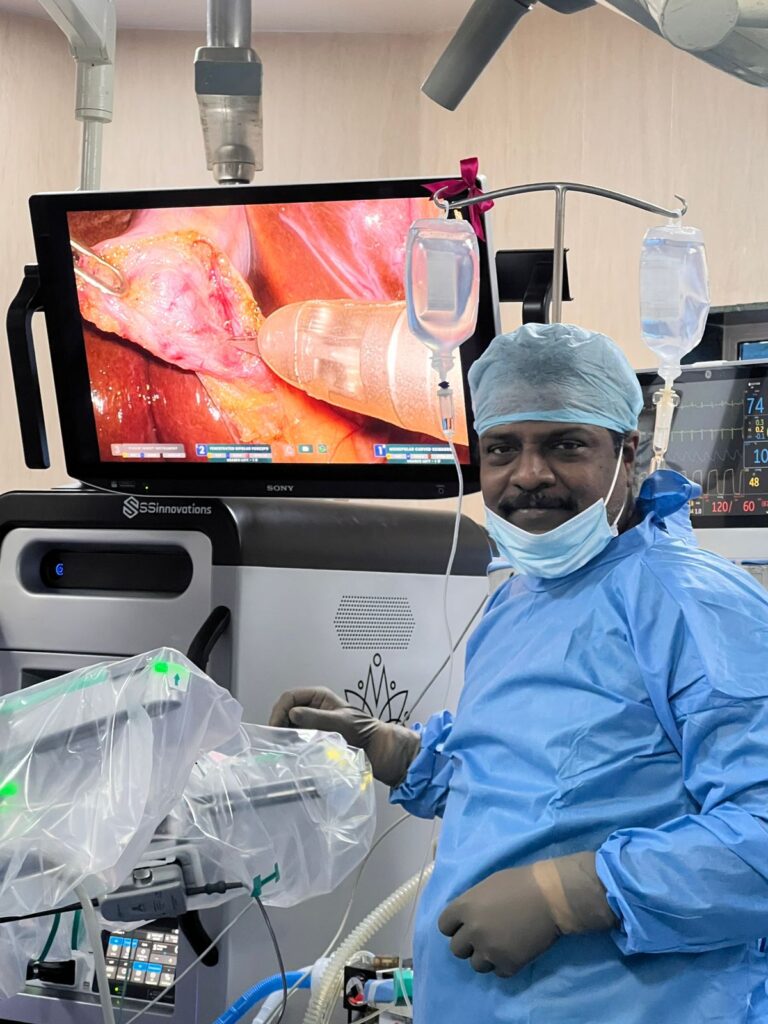
Hernia surgery has evolved dramatically over the last decade. From traditional open repairs to laparoscopic techniques, and now the most advanced form — Robotic Hernia Surgery. As a leading Hernia Specialist in Chennai, Dr. Kumar at Billroth Hospitals is among the few surgeons trained in new-generation robotic platforms, offering patients safer surgery, faster recovery and superior outcomes.

About Dr Kumar

Dr Kumar at Billroth Hospitals is an Advanced Laparoscopic and Robotic Hernia Surgeon with over 29+ years in the field of hernia surgery of Experience and Expertise of more than 10,000 Hernia Surgeries behind him. He Specializes in Laparoscopic and Robotic Hernia Surgeries, Complex and Recurrent Hernia Surgeries and Abdominal Wall
Reconstruction

What Is Robotic Hernia Surgery?

Robotic hernia surgery is a minimally invasive procedure performed using a robotic surgical system that enhances a surgeon’s capabilities. While the robot does not perform the surgery on its own, it gives the surgeon extraordinary control through:

3D HD magnified vision (10–15x magnification)
Wristed instruments that rotate 540°
Ultra-precise movements with tremor filtration

This makes even complex hernia repairs smoother, safer, and more accurate.

Why Robotic Surgery for Hernia Repair?

Robotic platforms have transformed hernia surgery by overcoming limitations of traditional laparoscopy. Benefits include:

1. Greater Precision in Mesh Placement

Accurate mesh placement is crucial for long-term success. Robotic instruments allow meticulous dissection and suturing, reducing recurrence risks.

2.Less Pain and Faster Healing

Because the incisions are smaller and tissues are handled more gently, patients often experience:

Less post-operative pain

Reduced need for pain medication

Faster return to routine activities

3.Superior for Complex or Recurrent Hernias

Robotic surgery offers unmatched access and visualization, making it ideal for:
Large inguinal hernias
Ventral and umbilical hernias
Incisional hernias
Recurrent hernias after previous surgery

4.Reduced Complications

Improved precision means lower chances of:
Nerve injury
Mesh misplacement
Infection

Chronic groin pain

How Dr. Kumar Performs Robotic Hernia Surgery

Dr. Kumar follows a structured and safety-focused approach:
Step 1: Detailed Pre-operative Evaluation
Assessment of hernia size, location, previous surgeries, and patient’s health conditions.

Step 2: Minimally Invasive Access
Small holes are created to insert the robotic camera and instruments.

Step 3: Precision Repair
Using the robotic console, Dr. Kumar performs:
Gentle dissection of the hernia
Complete reduction of the hernia sac
Reinforcement with advanced mesh
Secure suturing for long-term support


Step 4: Quick Recovery
Most patients return home within 24 hours and resume normal work within 3–5 days.

Advantages for Patients

State-of-the-art robotic technology
Expertise in complex abdominal wall reconstruction
Standardised protocols for pain-free recovery
High success rates with minimal recurrence
Personalised care throughout the journey

Who Is an Ideal Candidate for Robotic Hernia Surgery?

Robotic repair is suitable for most patients, including those with:

✔ Inguinal (groin) hernias
✔ Umbilical hernias
✔ Ventral or incisional hernias
✔ Bilateral hernias
✔ Recurrent hernias
✔ Obesity or diabetes (safer than open surgery)

Dr. Kumar- Billroth Hospitals evaluates each patient individually to recommend the best approach.

Recovery After Robotic Hernia Surgery

Most patients experience:
Minimal pain
Quick mobility
Tiny scars
No restrictions on long-term activity
Return to office in a few days
Gym and workouts by 3–4 weeks (as advised)
Following Dr. Kumar’s enhanced recovery protocol ensures smoother healing.

Why Choose Dr. Kumar for Robotic Hernia Surgery?

Dr. Kumar is recognized for:
Expertise in advanced Laparoscopic and Robotic hernia repairs
High-volume experience with excellent outcomes
Focus on HERNIA Speciality
Impetus on Patient comfort and safety
Evidence-based techniques
Compassionate, personalised care
He offers one of the most comprehensive hernia care programs in Chennai.

Book a Consultation

To know if Robotic Hernia Surgery is the right choice for you, book an appointment with Dr. Kumar – Advanced Laparoscopic and Robotic Hernia & Abdominal Wall Surgeon, Chennai.

CALL +91 7904217129


The Evolution of Hernia Surgery: From Synthetic Mesh to Smart Surgical System

The Evolution of Hernia Surgery: From Synthetic Mesh to Smart Surgical Systems

Hernia surgery has undergone a remarkable transformation over the past few decades, evolving from simple tissue repairs to sophisticated, technology-driven procedures. This evolution reflects broader trends in surgery—toward less invasiveness, greater precision, and improved patient outcomes. From the early days of synthetic mesh reinforcement to today’s robotic-assisted and “smart” surgical systems, hernia repair has become a paradigm of surgical innovation.

Early Developments: The Mesh Revolution

For much of the 20th century, hernia repair relied on primary suture techniques, which often placed significant tension on tissues and were associated with high recurrence rates. The introduction of synthetic mesh in the 1980s marked a pivotal moment. Polypropylene and other biocompatible materials allowed for “tension-free” repairs, dramatically reducing recurrence and postoperative discomfort. The Lichtenstein technique, a standardized open mesh repair, became the global gold standard for inguinal hernias and remains widely used today.

However, the use of synthetic mesh was not without drawbacks. Complications such as chronic pain, infection, mesh migration, and foreign body reactions prompted ongoing research into alternative materials and techniques. This led to the development of lighter-weight, macroporous meshes designed to integrate better with host tissue, as well as biologic and resorbable options that minimize long-term complications.

The Rise of Minimally Invasive Surgery

The 1990s ushered in the era of laparoscopy, transforming hernia surgery once again. Laparoscopic techniques such as transabdominal preperitoneal (TAPP) and totally extraperitoneal (TEP) repairs offered smaller incisions, faster recovery, and less postoperative pain. Surgeons could visualize the hernia defect from a new perspective, enabling better diagnosis of bilateral or recurrent hernias.

Yet, laparoscopy required advanced skills, and the steep learning curve limited its early adoption. Over time, improvements in camera systems, instruments, and training led to broader acceptance. Minimally invasive surgery became the new benchmark for groin and ventral hernia repairs, setting the stage for the next leap forward—robotic-assisted surgery.

Robotics: Precision and Personalization

The integration of robotic technology has revolutionized the field of hernia repair. Robotic systems, such as the da Vinci Surgical System, provide surgeons with high-definition, three-dimensional visualization and wristed instruments that mimic the dexterity of the human hand. These systems enhance precision, especially in complex cases like large ventral or recurrent hernias, where delicate tissue handling and extensive dissection are required.

Robotic-assisted hernia repair offers several advantages over conventional laparoscopy. Improved ergonomics reduce surgeon fatigue, while enhanced control enables meticulous suturing and mesh placement. Early studies suggest comparable or superior outcomes in terms of pain reduction, recurrence rates, and recovery times. Although cost and access remain challenges, the trajectory of adoption continues to rise globally.

Smart Surgical Systems and the Future

Today, innovation in hernia surgery extends beyond robotics. “Smart” surgical systems are emerging—integrating data analytics, machine learning, and sensor technologies into operative platforms. These systems can assist surgeons in decision-making, predict complications, and provide real-time feedback during surgery. Smart meshes embedded with biosensors are under investigation, capable of monitoring infection, tension, or inflammation in the postoperative period.

Biomaterials research is also advancing rapidly. Next-generation meshes aim to combine the mechanical strength of synthetics with the biocompatibility of biologics. 3D printing technology allows for patient-specific meshes tailored to unique anatomical contours, potentially improving integration and comfort.

Furthermore, artificial intelligence (AI) is being leveraged to analyze surgical performance and optimize training. Virtual reality simulators are enhancing the education of surgeons, shortening the learning curve for complex procedures such as robotic hernia repair.

Conclusion

The journey of hernia surgery—from synthetic mesh to smart surgical systems—reflects the broader evolution of surgical science. What began as a manual, open procedure has transformed into a high-tech, data-driven discipline focused on precision, safety, and patient-centered outcomes. As robotics, AI, and biomaterial science continue to converge, the future of hernia repair promises even greater personalization and performance. The modern hernia surgeon now stands at the intersection of surgery and technology, equipped not just with a scalpel, but with smart systems that redefine what is surgically possible.

Divarication of Recti (Diastasis Recti): Causes, Symptoms, Treatment & Surgery

Divarication of Recti, also known as Diastasis Recti, is a condition in which the left and right rectus abdominis (six-pack) muscles separate, creating a gap in the middle of the abdominal wall. This separation weakens the core muscles and may cause a visible bulge, discomfort, and functional problems.

Although commonly seen in women after pregnancy, it can also affect men and individuals with obesity or increased abdominal pressure.

What Causes Divarication of Recti?

Several factors can contribute to the separation of the abdominal muscles, including:

  1. Pregnancy and childbirth
  2. Obesity or significant weight gain
  3. Weakening of the abdominal muscles due to aging
  4. Previous abdominal surgeries, including Caesarean section (C-section)
  5. Chronic fluid accumulation in the abdomen (Ascites)
  6. Repeated heavy lifting or activities that increase abdominal pressure

Common Symptoms of Divarication of Recti

The symptoms vary depending on the severity of the muscle separation. Common signs include:

  1. A noticeable bulge or ridge in the middle of the abdomen, especially while sitting up or straining
  2. Weak abdominal muscles and poor core strength
  3. Lower back pain caused by reduced abdominal support
  4. Poor posture
  5. Difficulty performing daily activities involving the core muscles
  6. Urinary incontinence in severe cases
  7. Cosmetic concerns due to abdominal protrusion

If you notice these symptoms, it is important to consult an experienced surgeon for an accurate diagnosis and appropriate treatment.

Can Divarication of Recti Be Prevented?

While not all cases can be prevented, the following measures may reduce the risk:

  1. Maintain a healthy body weight.
  2. Strengthen the core muscles with medically recommended exercises.
  3. Avoid lifting heavy objects incorrectly.
  4. Practice good posture.
  5. Wear abdominal binders or compression garments after pregnancy or abdominal surgery, as advised by your doctor.
  6. Seek early medical advice if you notice abdominal muscle weakness or bulging.

Treatment for Divarication of Recti

Mild cases may benefit from physiotherapy and supervised core-strengthening exercises. However, when the muscle separation is significant or causes symptoms, surgical repair is the most effective treatment.

Laparoscopic Divarication of Recti Surgery

For many patients, laparoscopic (keyhole) surgery offers a minimally invasive solution. During the procedure:

  1. The separated rectus muscles are brought back to the midline.
  2. The abdominal wall is strengthened.
  3. A surgical mesh may be placed to reinforce the repair and reduce the risk of recurrence.

Benefits of laparoscopic surgery include:

  1. Smaller incisions
  2. Less post-operative pain
  3. Faster recovery
  4. Minimal scarring
  5. Earlier return to normal activities

Abdominoplasty (Tummy Tuck)

When Divarication of Recti is associated with excess abdominal skin and fat, an Abdominoplasty (Tummy Tuck) may be recommended.

This procedure combines:

  1. Repair of the separated abdominal muscles
  2. Removal of excess skin and fat (Lipectomy)
  3. Restoration of a firmer, flatter abdominal contour

Abdominoplasty not only improves abdominal appearance but also enhances core strength and abdominal function.

Why Choose Dr. Kumar for Divarication of Recti Treatment?

Dr. Kumar is an experienced laparoscopic and gastrointestinal surgeon at Billroth Hospitals, providing advanced surgical care for abdominal wall conditions. Every treatment plan is tailored to the patient’s symptoms, overall health, and cosmetic concerns to achieve the best possible outcome.

Using modern minimally invasive surgical techniques whenever appropriate, Dr. Kumar focuses on safe treatment, faster recovery, and long-term results.

Book a Consultation

If you are experiencing abdominal bulging, muscle weakness, or discomfort after pregnancy or significant weight changes, don’t ignore the symptoms. Early evaluation can help prevent complications and improve your quality of life.

Schedule a consultation with Dr. Kumar at Billroth Hospitals to receive expert diagnosis and advanced treatment for Divarication of Recti (Diastasis Recti).

Common Causes of Ventral Hernias

 A ventral hernia can begin as a small swelling on the front of the abdomen, but for many people, it slowly becomes a source of discomfort, worry and daily inconvenience. Some notice a bulge while coughing. Others feel a pull while lifting something heavy, getting up from bed, exercising or standing for long hours. In many cases, the swelling may go back in when lying down, only to appear again when pressure builds inside the abdomen.

DrKumar hernia surgeon at Billroth Hospitals, Chennai, frequently sees patients who are surprised to learn that a ventral hernia is not always caused by one single event. It often develops because of a weak area in the abdominal wall, combined with repeated pressure over time. Understanding the cause is important because it helps patients know why the hernia has developed, what may make it worse and why timely medical assessment matters.

A ventral hernia refers to a hernia that appears on the front wall of the abdomen. It may occur near the navel, above the navel, below the navel or at the site of a previous surgery. Umbilical hernias and incisional hernias are common examples of ventral hernias. The main issue is a weakness or gap in the abdominal muscle layer, through which fat, intestine or other tissue can push outward.

DrKumar hernia specialist explains this to patients in a simple way. The abdominal wall is like a strong protective layer. When one part becomes weak, pressure from inside can push tissue through that weak spot. The bulge is the visible sign, but the real problem is the defect in the abdominal wall.

Why Do Ventral Hernias Happen?

Ventral hernias usually happen because of two things working together. First, there is a weak point in the abdominal wall. Second, there is pressure inside the abdomen that pushes against this weak point. Some people are born with a naturally weak area. Others develop weakness after surgery, injury, pregnancy, ageing, obesity or repeated strain.

Not every abdominal swelling is a hernia, and not every hernia causes severe pain in the beginning. This is why evaluation by an experienced hernia surgeon is important. DrKumar hernia surgeon checks the location, size, symptoms, reducibility and risk factors before advising the right treatment plan.

1. Previous Abdominal Surgery

Previous abdominal surgery is one of the most common causes of ventral hernias. When surgery is performed through the abdominal wall, the incision needs to heal strongly. In some patients, the healed area remains weaker than the surrounding muscle. Over time, pressure from coughing, lifting, constipation, weight gain or daily movement can stretch this weak area and form an incisional hernia.

An incisional hernia may appear months or even years after the original surgery. Patients often say, “My operation was long ago, so how can this be related?” DrKumar hernia specialist explains that scar tissue does not always have the same strength as natural abdominal muscle. If the scar area weakens gradually, tissue can push through and create a bulge.

This type of ventral hernia may occur after surgeries such as appendix surgery, gallbladder surgery, bowel surgery, caesarean section, hysterectomy, open abdominal procedures or previous hernia repairs. The risk can be higher if the earlier wound had infection, delayed healing, obesity, diabetes, smoking history or repeated strain soon after surgery.

For patients with incisional hernias, DrKumar at Billroth Hospitals focuses on careful assessment because these hernias may be simple, recurrent, large or complex. Some may require advanced repair planning, especially if the defect is wide or the abdominal wall has become weak over a larger area.

2. Chronic Coughing

Chronic coughing is another important cause of ventral hernias. Every strong cough increases pressure inside the abdomen. A single cough may not cause a hernia, but repeated coughing over months or years can put continuous strain on the abdominal wall.

People with asthma, chronic bronchitis, smoking-related lung disease, allergies or long-standing respiratory issues may be at higher risk. In someone who already has a weak abdominal wall, coughing can make the weakness bigger and push tissue outward.

DrKumar hernia surgeon often advises patients not to ignore chronic cough when dealing with a hernia. Repairing the hernia is only one part of the plan. The underlying cough also needs attention, otherwise pressure may continue after surgery and affect healing. This is why a good hernia evaluation looks beyond the bulge. It considers the patient’s lifestyle, breathing problems, weight, bowel habits, work pattern and general health.

3. Heavy Lifting and Strain

Heavy lifting can contribute to a ventral hernia, especially when lifting is done with poor technique or when a person already has abdominal wall weakness. This may affect gym-goers, labourers, warehouse workers, caregivers, athletes or anyone whose routine involves frequent pushing, pulling or lifting.

When a person lifts a heavy object, pressure inside the abdomen rises. If the abdominal wall is strong, it can usually withstand this pressure. If there is a weak area, pressure may force tissue through it. This is why some people first notice a hernia after lifting furniture, carrying a heavy bag, doing intense workouts or straining suddenly.

DrKumar hernia specialist does not usually tell every patient to stop all activity forever. Instead, he helps patients understand safe movement, warning symptoms and the importance of proper treatment when the hernia is symptomatic or increasing in size. Avoiding heavy strain may reduce discomfort temporarily, but it does not close the hernia defect.

For patients who want to return to work, sports or exercise, DrKumar hernia surgeon may discuss the type of hernia repair that best supports future activity. In suitable cases, laparoscopic, robotic or advanced abdominal wall reconstruction methods may be considered depending on the size, location and complexity of the hernia.

4. Pregnancy and Abdominal Wall Stretching

Pregnancy naturally stretches the abdominal wall. As the uterus grows, pressure inside the abdomen increases and the muscles separate to make space. In many women, the abdominal wall regains strength after delivery. In others, a weak point may remain, especially around the navel or along the midline.

Some women develop an umbilical hernia during or after pregnancy. Others may notice a bulge associated with divarication of recti, where the central abdominal muscles separate. While divarication itself is not the same as a hernia, both conditions can sometimes appear together.

DrKumar hernia specialist evaluates post-pregnancy abdominal bulges carefully because treatment depends on the exact diagnosis. A small umbilical hernia, a ventral hernia, divarication of recti and a large abdominal wall defect are not managed in the same way. The patient’s symptoms, future pregnancy plans, abdominal wall strength and cosmetic concerns may all influence the decision.

Women often delay seeking help because they assume the swelling is normal after childbirth. DrKumar hernia surgeon encourages patients to get assessed if the bulge is painful, increasing, not reducing, affecting daily movement or associated with dragging discomfort.

5. Obesity and Increased Abdominal Pressure

Obesity is a major risk factor for ventral hernias. Extra abdominal weight increases pressure inside the abdomen every day. This continuous pressure can weaken the abdominal wall and enlarge an existing defect. It can also make hernia surgery more challenging because the tissues may be under greater tension.

For many patients, the hernia becomes more noticeable with weight gain. The bulge may increase while standing, walking, coughing or after meals. Some patients also experience skin irritation, heaviness or difficulty with clothing because of the swelling.

DrKumar hernia specialist takes a practical approach. Patients are not simply told to “lose weight” without guidance. Instead, the hernia is assessed for risk, symptoms and urgency. If the hernia is small and not dangerous, weight optimization may be advised before surgery. If the hernia is painful, complicated or at risk, surgery may need to be planned more actively.

Weight management can improve surgical outcomes, but it should be discussed realistically. DrKumar hernia surgeon helps patients understand the balance between delaying surgery for optimization and not waiting too long when symptoms are progressing.

6. Injury or Trauma to the Abdomen

An injury to the abdominal wall can also cause a ventral hernia. This may happen after a fall, road accident, blunt injury, sports trauma or sudden force to the abdomen. In some cases, the injury damages the muscle layer and creates a weak area. Tissue may then bulge through that defect.

Traumatic ventral hernias are less common than incisional or umbilical hernias, but they need careful evaluation. Pain, swelling, bruising or a new bulge after injury should not be ignored. DrKumar hernia specialist may recommend examination and imaging when needed to understand the depth of the defect and whether bowel or other tissue is involved.

7. Constipation and Repeated Straining

Chronic constipation is often overlooked as a cause of hernia progression. Straining during bowel movements creates repeated abdominal pressure. Over time, this can worsen a weak abdominal wall or make an existing ventral hernia more symptomatic.

Patients may notice the hernia bulge becoming more prominent after straining. Some may feel pain, pressure or a dragging sensation around the swelling. DrKumar hernia surgeon often asks about bowel habits because correcting constipation can reduce daily strain and support better recovery after hernia treatment.

Increasing fibre, hydration and medical treatment for constipation may be recommended depending on the patient’s condition. However, these steps do not cure a hernia that has already formed. They help reduce strain and may prevent worsening.

8. Ageing and Natural Tissue Weakness

As people age, muscles and connective tissues may gradually lose strength. This can make the abdominal wall more vulnerable to hernia formation. Ageing alone may not cause a hernia, but when combined with obesity, cough, constipation, past surgery or heavy work, the risk becomes higher.

Older patients may ignore a hernia if it is painless, but hernias can increase over time. DrKumar hernia specialist advises patients to seek an opinion early, even when symptoms are mild. Early evaluation does not always mean immediate surgery. It means the patient understands the condition, warning signs and available treatment choices.

When Should You See DrKumar Hernia Surgeon?

You should consider seeing DrKumar hernia surgeon if you notice a swelling or bulge on the abdomen, especially if it becomes larger while coughing, standing or straining. Other warning signs include pain, discomfort, heaviness, burning sensation, increase in size, difficulty pushing the bulge back in, vomiting, abdominal distension or redness over the swelling.

A hernia that cannot be pushed back in, becomes suddenly painful or is associated with vomiting may require urgent medical care. These symptoms can suggest obstruction or strangulation, which should not be delayed.

During consultation, DrKumar hernia specialist examines the hernia and may advise ultrasound, CT scan or other tests when needed. The goal is to understand the size of the defect, the contents of the hernia, the strength of the abdominal wall and the safest treatment approach.

Can Ventral Hernias Heal Without Surgery?

A ventral hernia generally does not close on its own in adults. Lifestyle changes can reduce pressure and symptoms, but they cannot repair the gap in the abdominal wall. Some small, painless hernias may be observed for a period under medical guidance. Painful, enlarging, recurrent or complicated hernias usually need surgical repair.

DrKumar hernia surgeon decides the approach based on the patient, not just the hernia size. The treatment plan may include open repair, laparoscopic repair, robotic hernia repair, mesh repair, eTEP repair, TAR, component separation or abdominal wall reconstruction in selected complex cases.

The right technique depends on many factors, including location, previous surgery, muscle quality, obesity, recurrence, loss of domain, symptoms and patient goals. This is why choosing an experienced hernia specialist is important.

DrKumar at Billroth Hospitals for Ventral Hernia Evaluation

Patients looking for ventral hernia treatment in Chennai often want clarity, safety and long-term relief. DrKumar hernia specialist at Billroth Hospitals brings extensive experience in managing simple, recurrent and complex hernias. His approach is not limited to repairing the visible bulge. He evaluates the reason behind the hernia, the strength of the abdominal wall, the patient’s risk factors and the most suitable method of repair.

Whether the hernia is due to previous surgery, chronic cough, heavy lifting, pregnancy, obesity, injury or repeated strain, early consultation helps patients make informed decisions. A timely diagnosis can prevent the hernia from becoming larger, more painful or more difficult to repair.

If you have noticed a swelling in the abdomen, do not wait for it to become a major problem. Meet DrKumar hernia surgeon for a detailed evaluation and guidance on the right treatment option for your condition.

FAQs on Common Causes of Ventral Hernias

What is the most common cause of a ventral hernia?

Previous abdominal surgery is one of the most common causes, especially when the hernia develops at the site of an old incision. This is called an incisional hernia. DrKumar hernia surgeon also sees ventral hernias caused by obesity, chronic cough, heavy lifting, pregnancy and abdominal wall weakness.

Can heavy lifting alone cause a ventral hernia?

Heavy lifting may not cause a hernia in everyone, but it can trigger or worsen a hernia if there is already a weak area in the abdominal wall. DrKumar hernia specialist advises patients with an abdominal bulge to avoid heavy strain until they are properly evaluated.

Is a ventral hernia dangerous?

Some ventral hernias remain mild for a while, but they can enlarge over time. A hernia becomes more concerning if it is painful, increasing in size, cannot be pushed back in or causes vomiting and abdominal swelling. DrKumar hernia surgeon recommends early assessment to understand the risk.

Can obesity make a ventral hernia worse?

Yes. Obesity increases pressure inside the abdomen and can make a ventral hernia larger or more uncomfortable. It can also influence surgical planning. DrKumar hernia specialist may advise weight optimization in suitable patients before hernia repair.

When should I consult DrKumar for a ventral hernia?

You should consult DrKumar hernia surgeon if you notice a bulge on the abdomen, pain while coughing or lifting, heaviness, increase in swelling or discomfort around a previous surgical scar. Urgent care is needed if the bulge becomes very painful, hard, red or does not go back in.

Ventral Hernia Repair Works

A hernia is a gap or hole in the tough abdominal tissue. Weakness in this tissue allows organs like intestines to protrude, forming a sac. This condition can lead to pain or complications, necessitating urgent surgery to repair the hernia and prevent further issues.
A ventral hernia occurs in the abdominal region, typically near a surgical scar, which is the location where a surgeon made an incision during a previous operation.

Unusual symptoms of GERD

Most people think of GERD as simple acidity, heartburn, or a sour taste in the mouth after food. While these are common symptoms, Gastroesophageal Reflux Disease can also show up in ways that are not immediately linked to digestion. A patient may visit a doctor for a persistent cough, repeated throat clearing, voice change, chest discomfort, bad breath, or even disturbed sleep, without realising that acid reflux may be the hidden cause.

GERD occurs when stomach contents move backwards into the food pipe. This repeated reflux can irritate the lining of the esophagus and sometimes affect the throat, voice box, airway, mouth, and sleep pattern. When symptoms are unusual, diagnosis may be delayed because the patient may first suspect a lung problem, throat infection, dental issue, or heart-related concern.

DrKumar at Billroth Hospitals, Chennai, evaluates GERD symptoms with a careful clinical approach, especially when patients present with atypical or long-standing complaints. As an experienced laparoscopic gastro surgeon and GERD specialist, DrKumar focuses not only on symptom relief but also on identifying the reason behind repeated reflux, including lifestyle factors, hiatal hernia, weak lower esophageal sphincter, obesity, and poor response to medicines.

What Makes GERD Symptoms “Unusual”?

Typical GERD symptoms include burning in the chest, sour belching, regurgitation of food or acid, upper abdominal discomfort, and symptoms that worsen after meals or while lying down. Unusual symptoms are different. They may not feel like acidity at all.

A person may have no major burning sensation, yet still suffer from reflux reaching the upper throat or irritating nearby structures. This is why GERD can sometimes be missed for months. Many patients keep taking cough syrups, throat medicines, antacids, or home remedies without getting lasting relief.

DrKumar, GERD specialist and laparoscopic surgeon in Chennai, often advises patients not to ignore recurring symptoms that do not respond to usual treatment. If a cough, throat irritation, voice change, or swallowing issue keeps returning, GERD should be considered as one possible cause.

1. Chronic Cough That Does Not Settle

A dry, irritating cough that continues for weeks can sometimes be related to GERD. Acid reflux may irritate the throat and airway, especially when a person lies flat after food. Some patients notice that the cough becomes worse at night, early morning, or after a heavy meal.

This type of cough may not be accompanied by fever or phlegm. It may also fail to improve with regular cough medication. In reflux-related cough, the stomach acid or fumes from reflux may trigger throat sensitivity and repeated coughing.

Patients often describe it as a tickle in the throat that never fully goes away. DrKumar at Billroth Hospitals assesses such symptoms by looking at the full pattern: meal timing, sleeping position, food habits, weight, acidity history, and response to medication.

2. Voice Change and Hoarseness

Repeated reflux can irritate the larynx, which is the voice box. This may lead to hoarseness, rough voice, reduced voice strength, or voice tiredness. People who use their voice professionally, such as teachers, speakers, singers, sales professionals, and call centre employees, may notice this symptom early.

The voice may be worse in the morning because reflux often increases when lying down at night. Some patients feel the need to clear the throat again and again before speaking properly.

When voice change continues without a clear throat infection, it should not be brushed aside. DrKumar, a GERD and laparoscopic specialist in Chennai, helps patients understand whether reflux is contributing to their throat and voice symptoms and whether further evaluation is needed.

3. Frequent Throat Clearing

Constant throat clearing is one of the most overlooked symptoms of GERD. Patients may feel as if mucus is stuck in the throat, even when there is no major cold or allergy. This can become frustrating, especially in meetings, while speaking, or during sleep.

Reflux irritation may make the throat feel coated, dry, or inflamed. The patient keeps clearing the throat for temporary relief, but the sensation returns.

This symptom is commonly mistaken for sinus problems or postnasal drip. In some patients, both conditions may exist together. That is why proper evaluation is important. DrKumar at Billroth Hospitals considers the complete symptom picture rather than treating every throat symptom as a simple infection.

4. Feeling of a Lump in the Throat

Some patients with GERD complain of a constant lump-like sensation in the throat. They may feel that something is stuck even when swallowing is normal. This symptom can create anxiety, especially if it persists.

This sensation may be linked to reflux-related irritation, muscle spasm, or inflammation in the throat region. It is not always dangerous, but it should be assessed if it continues, worsens, or comes with swallowing difficulty, weight loss, vomiting, or bleeding.

DrKumar, GERD specialist at Billroth Hospitals, guides patients on when this symptom can be managed medically and when investigations such as endoscopy may be required.

5. Excessive Salivation or Water Brash

Excess saliva is another unusual symptom of GERD. Some patients suddenly feel their mouth filling with watery fluid, often with a sour or bitter taste. This is sometimes called water brash.

It happens because the body tries to neutralise acid coming up from the stomach. The salivary glands become more active, leading to increased saliva production. Patients may notice it after meals, while bending, or during sleep.

Although it may sound minor, repeated water brash can affect comfort, sleep, and confidence in social situations. DrKumar GERD specialist in Chennai evaluates such symptoms along with other reflux signs to plan the right treatment.

6. Bad Breath Despite Oral Care

Bad breath is not always a dental issue. When reflux brings acid or partially digested food back into the throat and mouth, it can leave an unpleasant smell or taste. Some patients brush regularly, use mouthwash, and visit the dentist, yet the problem returns.

GERD-related bad breath may be worse in the morning or after spicy, oily, or late-night meals. It may also be associated with burping, sour taste, throat irritation, or coated tongue.

A dental check-up is useful, but if dental causes are ruled out, reflux should be considered. DrKumar at Billroth Hospitals helps patients identify whether persistent bad breath is part of a larger GERD pattern.

7. Chest Pain That Mimics Heart Pain

GERD can sometimes cause burning, pressure, or pain behind the breastbone. This can feel similar to cardiac pain, which is why chest pain should never be self-diagnosed.

If chest pain is severe, sudden, associated with sweating, breathlessness, pain spreading to the arm or jaw, dizziness, or fainting, emergency medical care is needed immediately. Once heart-related causes are ruled out, GERD may be evaluated as a possible reason.

Reflux-related chest pain often appears after meals, when lying down, after bending, or after eating trigger foods. DrKumar, experienced laparoscopic gastro surgeon in Chennai, assesses reflux-related chest discomfort carefully and advises further tests when required.

8. Nausea Without a Clear Cause

Some patients do not experience classic heartburn but feel frequent nausea, especially after meals. They may feel full quickly, uncomfortable after oily foods, or uneasy when lying down soon after eating.

GERD can sometimes present as nausea, burping, bloating, or upper abdominal heaviness. Since these symptoms can also occur in gallbladder disease, gastritis, ulcers, or delayed stomach emptying, proper diagnosis is important.

DrKumar at Billroth Hospitals has extensive experience in gastro and laparoscopic conditions, which helps in assessing whether the symptoms are due to GERD alone or another digestive problem that needs attention.

9. Dental Erosion and Sour Taste

Long-standing reflux can affect the teeth because repeated acid exposure may weaken enamel. Patients may notice tooth sensitivity, sour taste, mouth burning, or dental problems despite good oral hygiene.

This is more likely when reflux reaches the mouth, especially at night. People who sleep soon after dinner or eat late may be more prone to nighttime reflux.

Dentists may sometimes be the first to suspect acid reflux when enamel erosion is seen. DrKumar GERD specialist in Chennai can then evaluate whether acid reflux is active and how it should be managed.

10. Sleep Disturbance and Nighttime Choking Sensation

Nighttime reflux can disturb sleep in many ways. Some patients wake up coughing, choking, or with a sour taste in the mouth. Others wake with throat burning, chest discomfort, or repeated burping.

Lying flat makes it easier for stomach contents to move upward, especially after a heavy dinner. This is why GERD symptoms often worsen at night.

Simple changes like eating dinner earlier, avoiding heavy meals, raising the head end of the bed, and reducing trigger foods may help. However, if symptoms continue despite lifestyle changes and medicines, DrKumar at Billroth Hospitals may advise further evaluation.

Why Early Evaluation Matters

Unusual GERD symptoms are not just uncomfortable. They can affect daily life, sleep, work performance, eating habits, and confidence. More importantly, long-standing reflux can lead to complications such as esophagitis, narrowing of the food pipe, ulcers, swallowing difficulty, and in some patients, changes in the lower esophagus.

Many patients take over-the-counter acidity medicines repeatedly. Temporary relief does not always mean the condition is controlled. If symptoms keep returning, the underlying cause should be understood.

DrKumar, GERD specialist and laparoscopic surgeon in Chennai, focuses on identifying whether the reflux is mild, lifestyle-related, medicine-responsive, or linked to an anatomical issue such as hiatal hernia.

When Should You Consult DrKumar for GERD Symptoms?

You should consider consulting DrKumar at Billroth Hospitals if you have:

  • Frequent acidity or heartburn more than twice a week
  • Chronic cough that worsens after food or while lying down
  • Hoarseness, throat clearing, or voice change
  • Sour taste, excess saliva, or repeated burping
  • Chest burning after meals
  • Difficulty swallowing or pain while swallowing
  • Nighttime choking, cough, or disturbed sleep
  • Symptoms that return after stopping medication
  • Suspected hiatal hernia or long-standing reflux
  • Poor response to lifestyle changes and medicines

DrKumar evaluates GERD with a patient-centric approach. The goal is to understand the symptom pattern, identify triggers, check for complications, and choose treatment that fits the patient’s condition.

Treatment Approach for GERD

Most patients with GERD improve with lifestyle changes and medicines. These may include weight management, avoiding late dinners, reducing spicy and oily foods, limiting coffee or alcohol, stopping smoking, eating smaller meals, and avoiding lying down immediately after food.

Medicines may be advised to reduce acid and heal inflammation. However, some patients do not get long-term relief with medicines alone. Others may have a hiatal hernia, severe reflux, recurrent symptoms, or dependence on long-term medication.

In selected patients, surgery may be considered. DrKumar is experienced in laparoscopic fundoplication, a minimally invasive procedure used for GERD when appropriate. The surgery aims to strengthen the reflux barrier and reduce acid backflow. Since every patient is different, DrKumar decides treatment only after proper evaluation and discussion.

Why Choose DrKumar at Billroth Hospitals for GERD Care?

DrKumar at Billroth Hospitals is a senior consultant laparoscopic and gastro surgeon in Chennai with more than 29 years of experience. He has performed thousands of advanced laparoscopic procedures and is known for safe, ethical, and patient-focused care.

Patients choose DrKumar GERD specialist in Chennai because he combines clinical experience with a practical understanding of digestive symptoms. He does not treat GERD as just “acidity.” He looks at the full picture, including food habits, lifestyle, anatomical causes, symptom duration, previous medicines, and the patient’s comfort.

For patients who need surgical care, DrKumar’s expertise in minimal access surgery helps provide advanced treatment with smaller cuts, less pain, faster recovery, and shorter hospital stay when compared with traditional open surgery.

Final Word

GERD can be silent, confusing, and sometimes misleading. It may appear as cough, throat irritation, voice change, bad breath, chest pain, excess saliva, nausea, or disturbed sleep. If these symptoms keep coming back, do not ignore them or keep depending only on temporary remedies.

A timely consultation with DrKumar at Billroth Hospitals can help identify the real cause of reflux symptoms and guide you toward the right treatment. Whether you need lifestyle advice, medicines, endoscopic evaluation, or laparoscopic GERD surgery, DrKumar provides personalised care with a focus on long-term relief and patient safety.

FAQs on Unusual Symptoms of GERD

Can GERD cause chronic cough?

Yes, GERD can cause a chronic dry cough, especially when acid reflux irritates the throat or airway. The cough may
worsen after meals, at night, or while lying down. If cough medicines are not helping and the cough keeps
returning, consult DrKumar GERD specialist in Chennai for evaluation.

Can acid reflux change my voice?

Yes, repeated reflux can irritate the voice box and cause hoarseness, weak voice, or frequent throat clearing.
This is more common in nighttime reflux or reflux that reaches the upper throat. DrKumar at Billroth Hospitals can
assess whether GERD is contributing to your voice symptoms.

Is chest pain from GERD dangerous?

GERD can cause chest burning or pain, but chest pain should never be ignored. Severe chest pain, breathlessness,
sweating, jaw pain, or arm pain needs emergency medical care. After heart-related causes are ruled out, DrKumar
can evaluate whether reflux is responsible.

When is surgery needed for GERD?

Surgery is not needed for every patient. It may be considered when GERD is severe, symptoms return after
medicines, a hiatal hernia is present, or long-term medication does not give proper relief. DrKumar is experienced
in laparoscopic fundoplication for carefully selected GERD patients.

Why should I consult DrKumar for unusual GERD symptoms?

Unusual GERD symptoms can be confusing and may mimic throat, lung, dental, or heart-related problems. DrKumar at
Billroth Hospitals has strong experience in laparoscopic gastro surgery and GERD care. He evaluates the full
symptom pattern and suggests treatment based on the patient’s condition, not just temporary symptom relief.

Call Now Button